


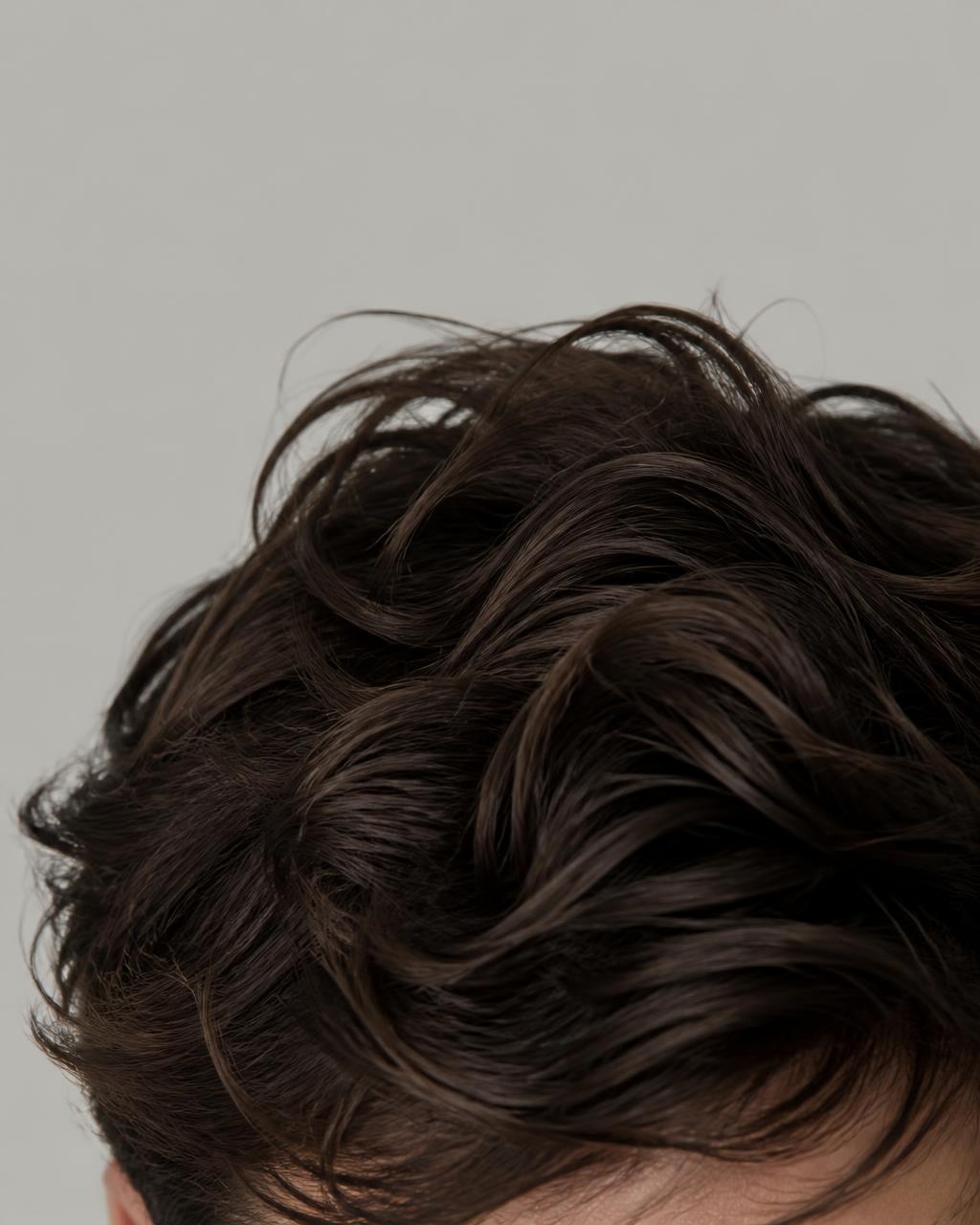
Cowlicks & Growth Patterns
How to Fix a Cowlick That Never Sits Down
9 min readReviewed by the NoonProof editorial team
Quick answer
How do I fix a cowlick that will not sit down?
A cowlick is a patch where hair grows out of the scalp in a spiral or opposing direction, most often at the crown or front hairline. You cannot remove it, because the angle is set at the follicle. You can override it daily: wet the area at the scalp, dry it in the opposite direction to its natural fall under tension, finish on cool air, then anchor the root with a dry, matte product. Styling a cowlick when the hair is dry almost never holds.[1]
Key takeaways
- A cowlick is the angle the follicle sits at in the scalp — it cannot be removed, only overridden.[1]
- The fix happens while the hair dries. Product applied to dry hair fights a set shape and loses.[2]
- Dry the cowlick against its natural fall with tension, then finish on cool air to lock the new direction.[1]
- Anchor at the root with a dry, matte product; weight on the lengths pulls the patch back into its spiral.[1]
- Working with a crown cowlick as deliberate volume is usually easier than flattening it.[3]
What a cowlick actually is
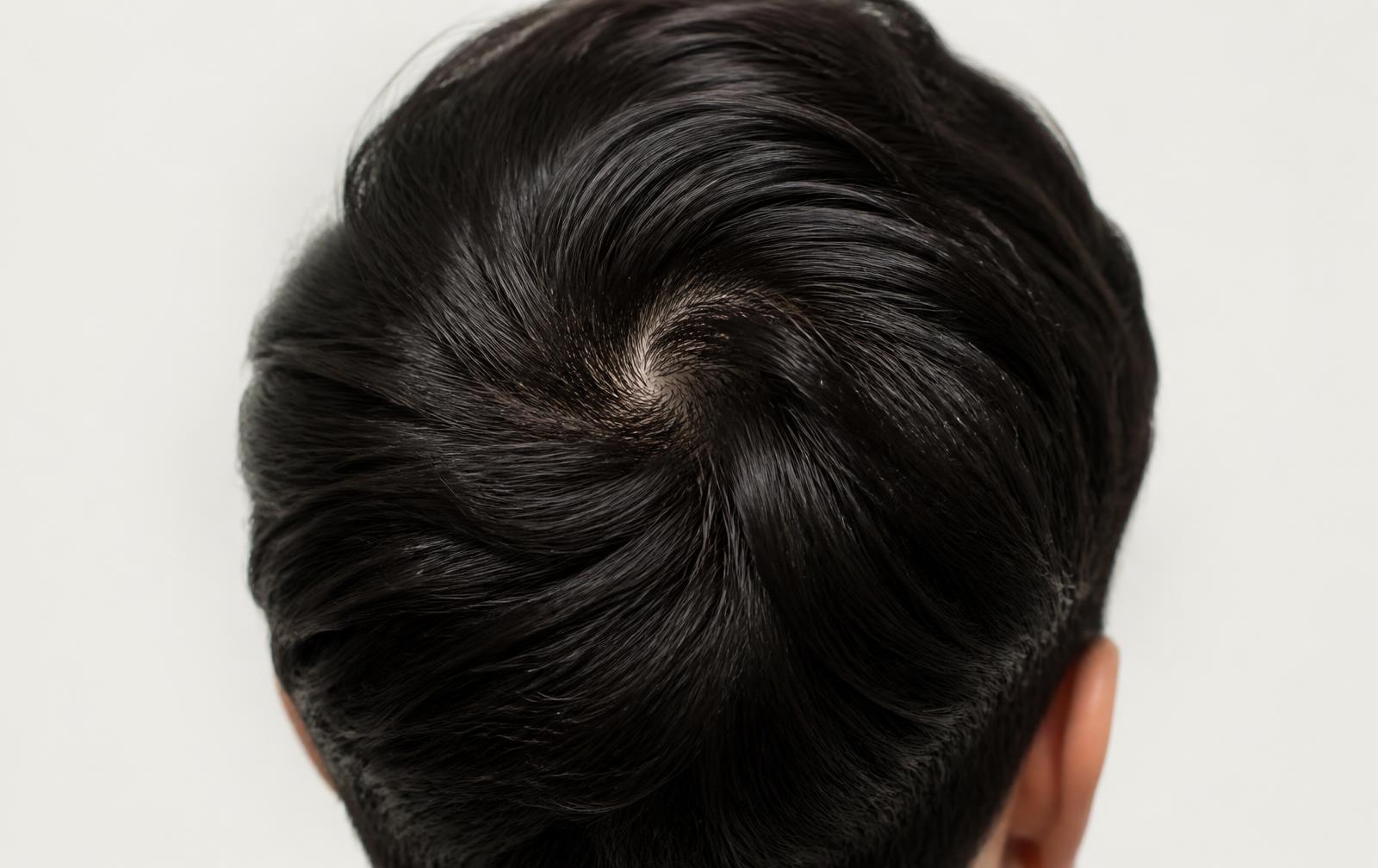
Hair does not grow straight out of the head. Every follicle sits in the scalp at an angle, and that angle decides the direction the strand travels once it clears the surface. Across most of your head those angles line up, which is why hair falls in a consistent direction and takes a part cleanly.
A cowlick is a patch where the angles disagree with their neighbours. Instead of lying in the same direction, the follicles spiral outward from a centre point, or tilt against the surrounding growth. The two common locations are the crown, where a spiral is normal and simply more pronounced in some men, and the front hairline, where an opposing patch pushes a section of the fringe upward or sideways.
The important consequence: the angle is a property of the follicle, not of the hair. Cutting it shorter, combing it harder or loading it with product does not change where the strand leaves your scalp. Anything that appears to fix a cowlick is temporary by definition, which is why the routine matters more than the product.
Why it defeats dry styling
Most men meet a cowlick with force: comb it flat, press it down, add more paste. It sits for a few minutes and then lifts again, usually the moment they stop looking.
The reason is that a dry strand has already set. As hair dries, internal hydrogen bonds reform and hold whatever position the strand was in when the last of the water left it. On a cowlick, that position is the spiral. Pushing dry hair into a different direction bends it against a shape it has already locked into, and the moment the physical pressure comes off, it returns.
Water resets that. Wetting the patch breaks the bonds again and gives you a window in which the hair can be set in a different direction. That window is the whole opportunity — everything else is maintenance.
The ninety-second routine
This works whether you are flattening a hairline cowlick or lifting a crown one.
- 01Wet the patch at the scalp. Not the lengths — the roots. A damp hand pushed into the area is enough; you do not need to rewash. The hair must be wet enough that you can feel coolness at the skin.
- 02Dry against the natural fall. Set the dryer to medium heat, put your fingers into the root and pull the section in the direction opposite to where it wants to go. If the cowlick throws hair forward and left, dry it back and right.
- 03Keep tension on. Fingers, a small brush or a comb held taut gives a far more durable set than air-drying with your hand hovering nearby. Tension is doing more work here than heat.
- 04Overcorrect slightly. A cowlick will migrate back part of the way during the day. Setting it a little past where you want it lands you in the right place by mid-afternoon.
- 05Finish cool for fifteen seconds. Cool air is what locks the reformed bonds. Skipping this is the most common reason a correctly dried cowlick still lifts by 10am.
- 06Anchor at the root. A small amount of a dry, matte product worked in at the scalp only — clay, paste or powder. It holds the new angle without adding shine or weight.
Product choice for a cowlick
The requirement is grip at the root with minimal weight. Anything heavy on the lengths gives the spiral leverage to pull the section back.
| Product | Use on a cowlick | Notes |
|---|---|---|
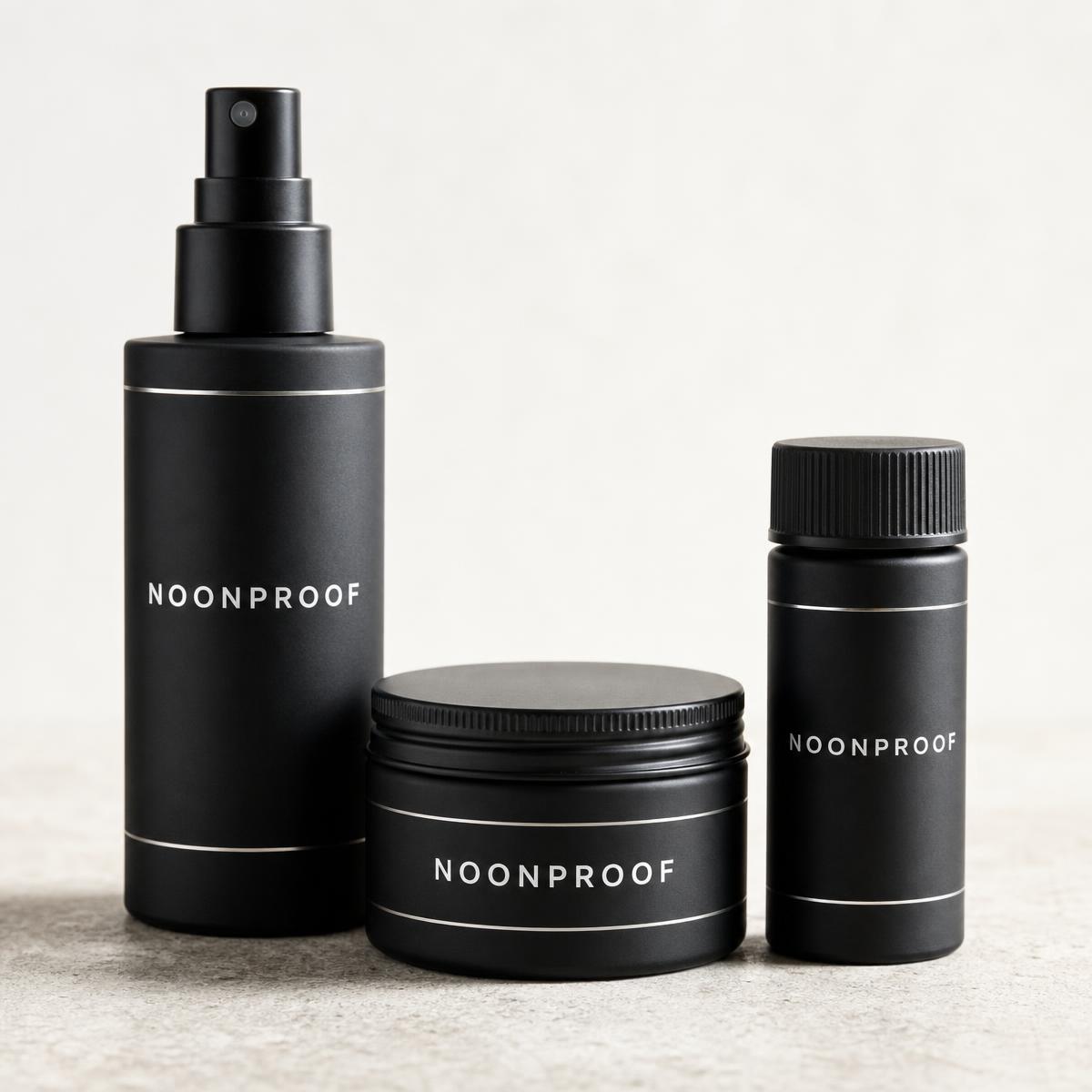
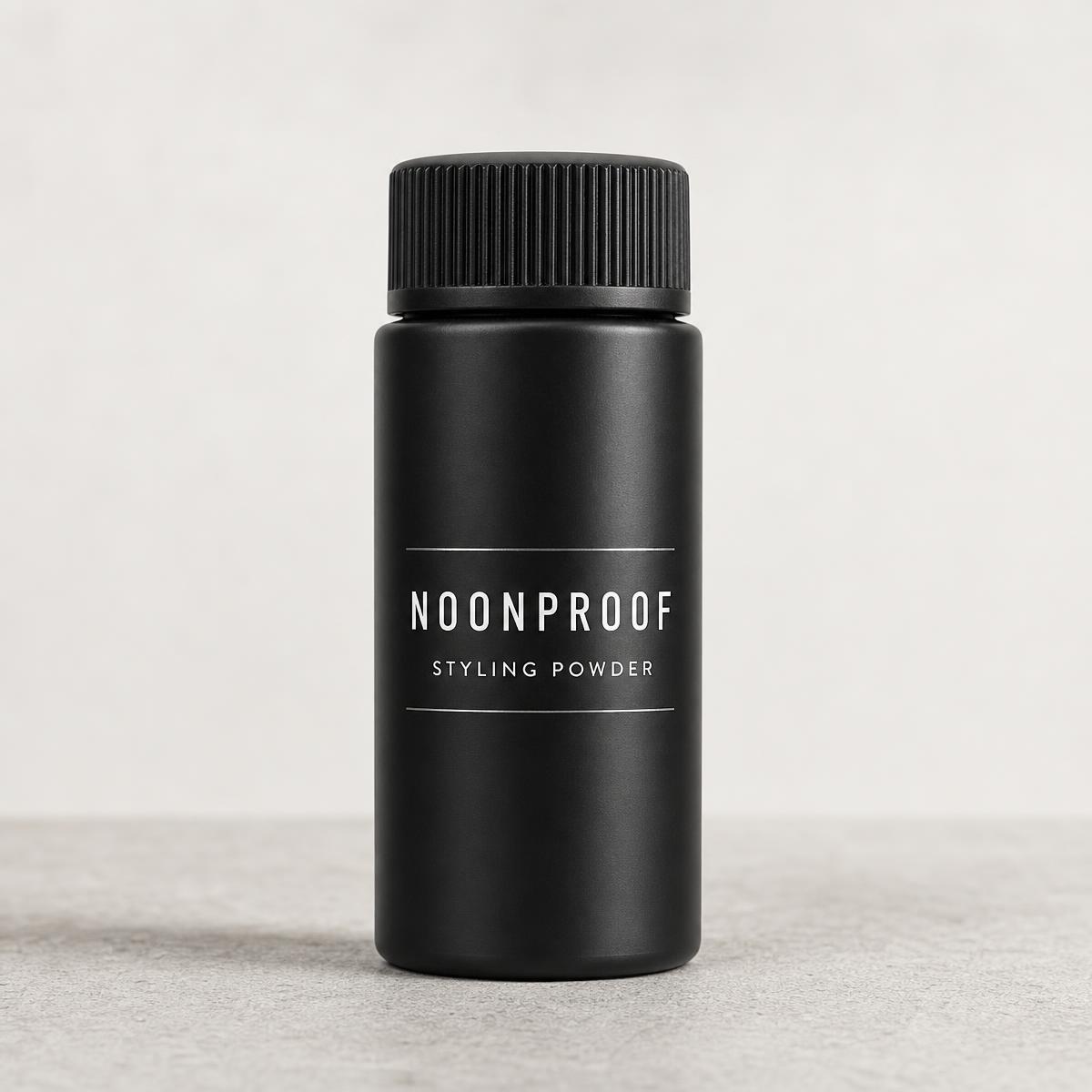
| Hair powder | Best for crown cowlicks | Pure root friction, no weight, easy to reapply midday |
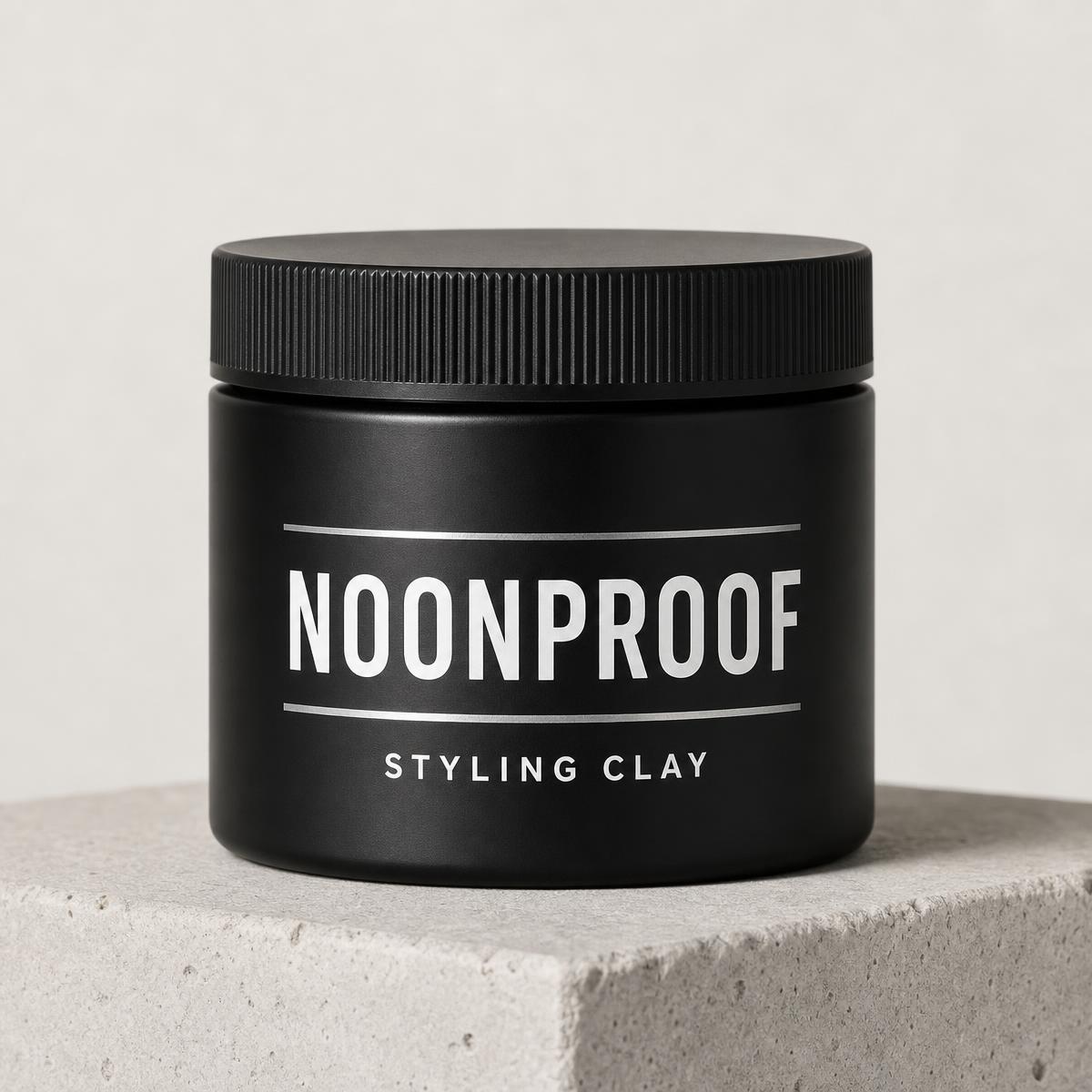
| Matte clay | Best for hairline cowlicks | Firm root anchor; emulsify fully and use fingertips only |
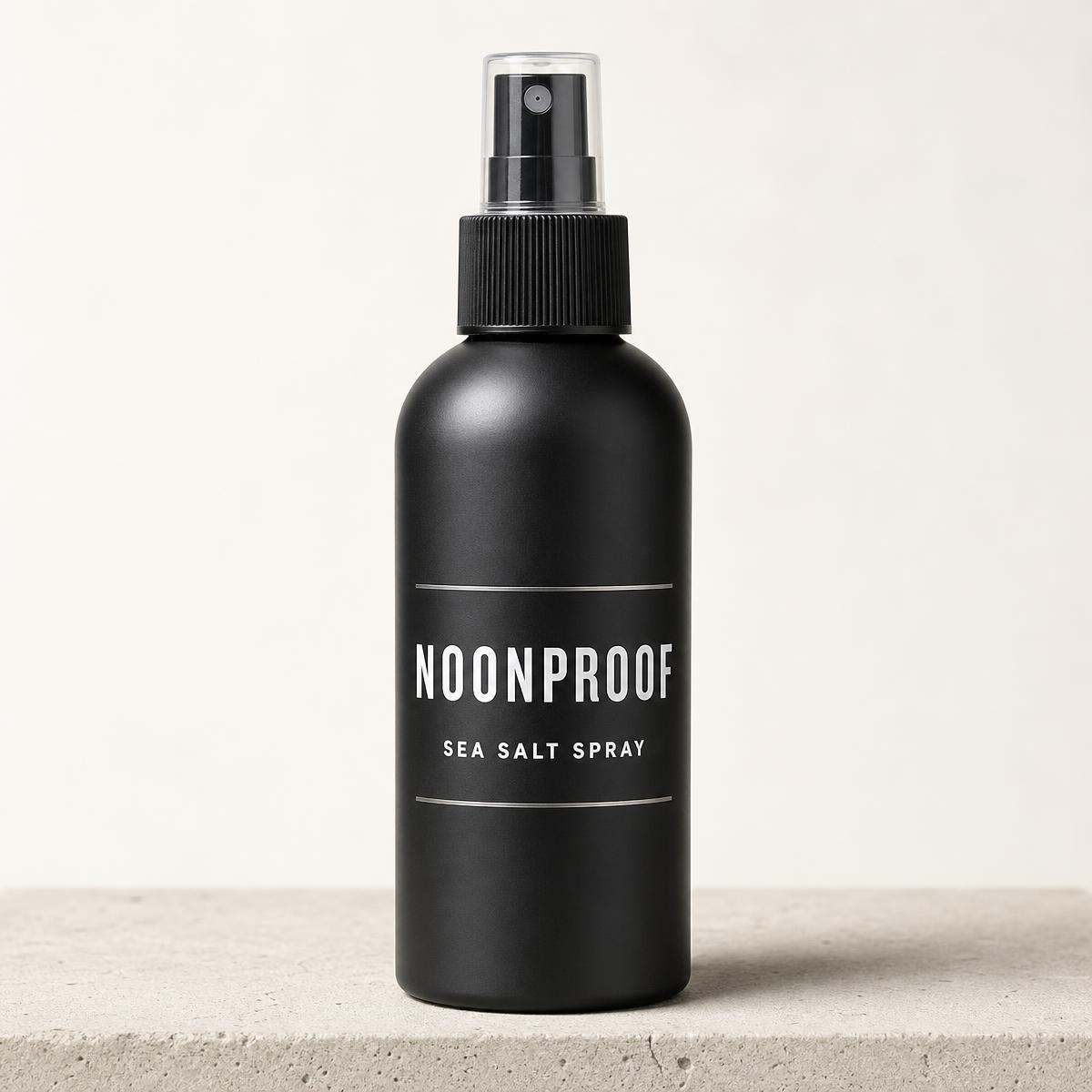
| Sea salt spray | Useful before drying | Adds surface texture so the set holds better through the day |
| Pomade, gel or oil | Avoid | Weight and slip both work in the cowlick''s favour |
Apply less than you think. A cowlick problem that gets worse through the morning is usually an overloaded root that has slowly given up under the weight.
Working with it instead of against it
For a crown cowlick, flattening is the hardest possible goal — you are asking a spiral to lie in one direction it never grows in. Building the cut and the style around the lift is usually less work and looks more intentional. A crown that stands up on purpose reads as volume. The same crown, half-flattened and lifting unevenly by noon, reads as a mistake.
For a hairline cowlick, direction matters more than height. Choose the side the patch naturally leans toward and part with it rather than across it. Fighting a hairline cowlick with a part on the wrong side means restyling it every few hours.
Cut length also changes difficulty. Very short hair has no weight to hold a corrected direction and will show the growth pattern plainly. Slightly longer hair through the affected area gives you enough mass to direct. Mention the cowlick to your barber explicitly — it changes how they should cut around it.
Fixing one during the day
When a cowlick reappears in the afternoon, the recovery is the same sequence in miniature.
- Dampen just that patch at the scalp with wet fingers.
- Hold it in the corrected direction for twenty or thirty seconds while it dries. Body heat is enough on a small area.
- Add a small shake of powder at the root and lift or press into place.
What does not work is adding cream product on top. The hair in that patch has re-set into its spiral, and a layer of paste over a set shape adds weight without changing direction — the section ends up heavier, shinier and still standing up.
When the problem is not the cowlick
Two other patterns get blamed on cowlicks regularly.
If the entire crown drops rather than one patch lifting, that is a root-lift problem across the whole area, not a growth direction: why thick, straight hair falls flat by midday covers it.
If the patch behaves in the morning and misbehaves only on humid days, the set is releasing because of moisture in the air rather than the growth angle. See how to keep your hair styled in humidity.
And if the corrected section holds but looks greasy and heavy by lunchtime, the dose is the variable — how much hair product you should actually use.
How we know this
- Hair follicle orientation and growth direction — Follicles sit in the scalp at an angle; that angle determines the direction a strand leaves the head and is fixed for the life of the follicle.
- Hydrogen bonding and temporary hair setting — Water breaks the hydrogen bonds inside a strand; the bonds reform as it dries, which is why a shape set on wet hair holds and one forced on dry hair does not.
- NoonProof styling observations — In-house testing across crown and hairline cowlicks; described as observed behaviour, not clinical measurement.
Last reviewed August 12, 2026
What this means for your routine
Where NoonProof fits
- Root anchor
NoonProof Styling Powder
Adds friction directly at the scalp so a corrected crown cowlick holds its new direction without added weight.
See Styling Powder - Hairline hold
NoonProof Styling Clay
A matte, dry finish that anchors a front cowlick in place without the shine or slip that lets it lift again.
See Styling Clay
Keep reading
Related guidance
Filter the library by the problem you are solving, your hair type, or the technique you want to get right.
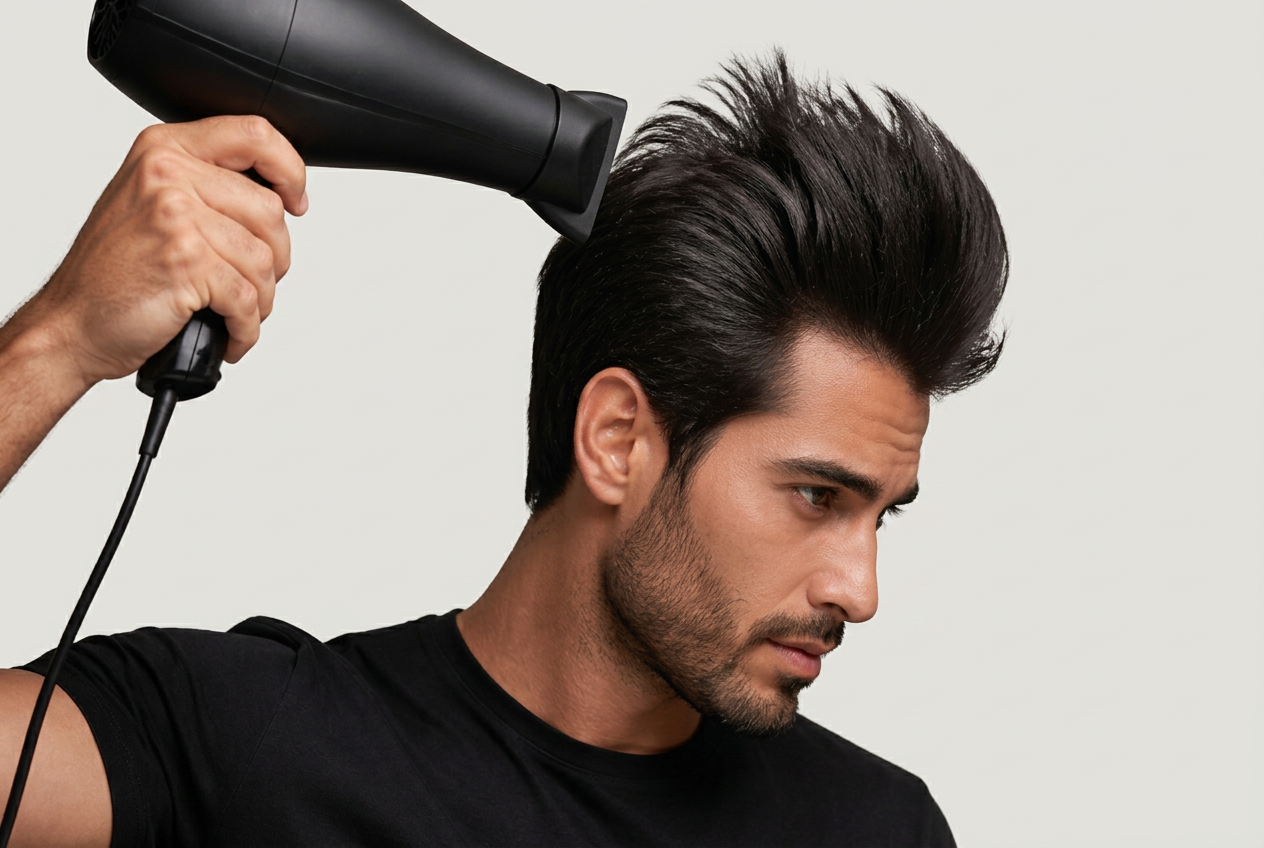 Blow-Dry Technique
How to Blow-Dry Thick Hair for Volume That Lasts
The drying stage decides your whole day. A repeatable sequence for setting root direction in thick hair.8 min read Volume & Root Lift
Why Thick, Straight Hair Falls Flat by Midday
Thick hair has the mass to hold a shape but none of the structure. Here is why it collapses a few hours in, and how to set the root so it does not.9 min read Thick & Resistant Hair
The Best Styling Routine for Dense, Resistant Hair
When there is more hair than product can move, sequence beats strength. A full routine for dense, coarse hair.10 min read Humidity & Hold
How to Keep Your Hair Styled in Humidity
Humid air does not just make hair untidy — it physically rebuilds the strand. Here is what happens, and how to set a shape that survives it.9 min read