


Fine Hair
How to Get Volume in Fine Hair Without It Going Crunchy
8 min readReviewed by the NoonProof editorial team
Quick answer
How do I get volume in fine hair without it feeling crunchy?
Fine hair goes crunchy because the products used to lift it are stiff films applied in amounts meant for thick hair. Build volume during drying instead: dry the roots against their natural fall, then use a tiny amount of a dry, texture-forming product at the scalp only. Grip at the root creates lift; film over the lengths creates crunch.
Key takeaways
- Crunch is a symptom of too much film-forming product, not of strong hold.
- Fine hair needs a fraction of the dose thick hair needs — start at a quarter and work up.
- Volume comes from the root angle set while drying; product only preserves it.
- Apply at the scalp and leave the last few centimetres of every strand completely untouched.
Why fine hair ends up crunchy
Fine hair has very little mass per strand. That is what makes it easy to lift — and what makes it easy to coat. A dose of product that disappears into thick hair sits on fine hair as a visible layer.
Most styling products build hold in one of two ways. Some add texture to the surface of the strand so neighbouring strands catch on each other and hold themselves apart. Others dry into a film that stiffens the hair into position. On thick hair the second approach is often necessary. On fine hair it is what produces the crunch: the film has almost no hair to disappear into, so it becomes the dominant thing you feel.
The crunch is not a sign the product is too strong. It is a sign there is more product than hair.
Volume is set before product, not by it
This is the part that changes results most, and it costs nothing.
When hair dries, each strand hardens in whatever direction it was held while the last water left it. That angle at the scalp is your volume for the day. Product applied afterwards can hold that angle in place; it cannot create it. Fine hair makes this especially obvious because it dries fast — if you let it dry flat while you do something else, the shape is already decided before you open anything.
So the sequence for fine hair is: get most of the water out, dry the roots against the direction they naturally fall, finish on cool air to set the shape, and only then add a small amount of product to keep it there.
The drying method for fine hair
- 01Towel until the hair is damp rather than wet. Fine hair holds less water than it feels like it does, and over-drying with a towel creates frizz rather than volume.
- 02Use medium heat and low airflow. High airflow blows fine hair flat in the direction of the air rather than lifting it.
- 03Work at the root only. Push your fingers into the scalp and dry against the natural fall — if your hair wants to sit forward, dry it back; if it parts on the left, lift it away from the part.
- 04Move constantly. Holding heat in one place cooks fine strands and makes them fluffy rather than lifted.
- 05Finish on the cool setting for about fifteen seconds across the crown. This is what makes the shape stay put.
How much product fine hair actually needs
Start at roughly a quarter of what a product recommends and work up only if it genuinely falls.
| Product | Fine hair dose | Where it goes |
|---|---|---|
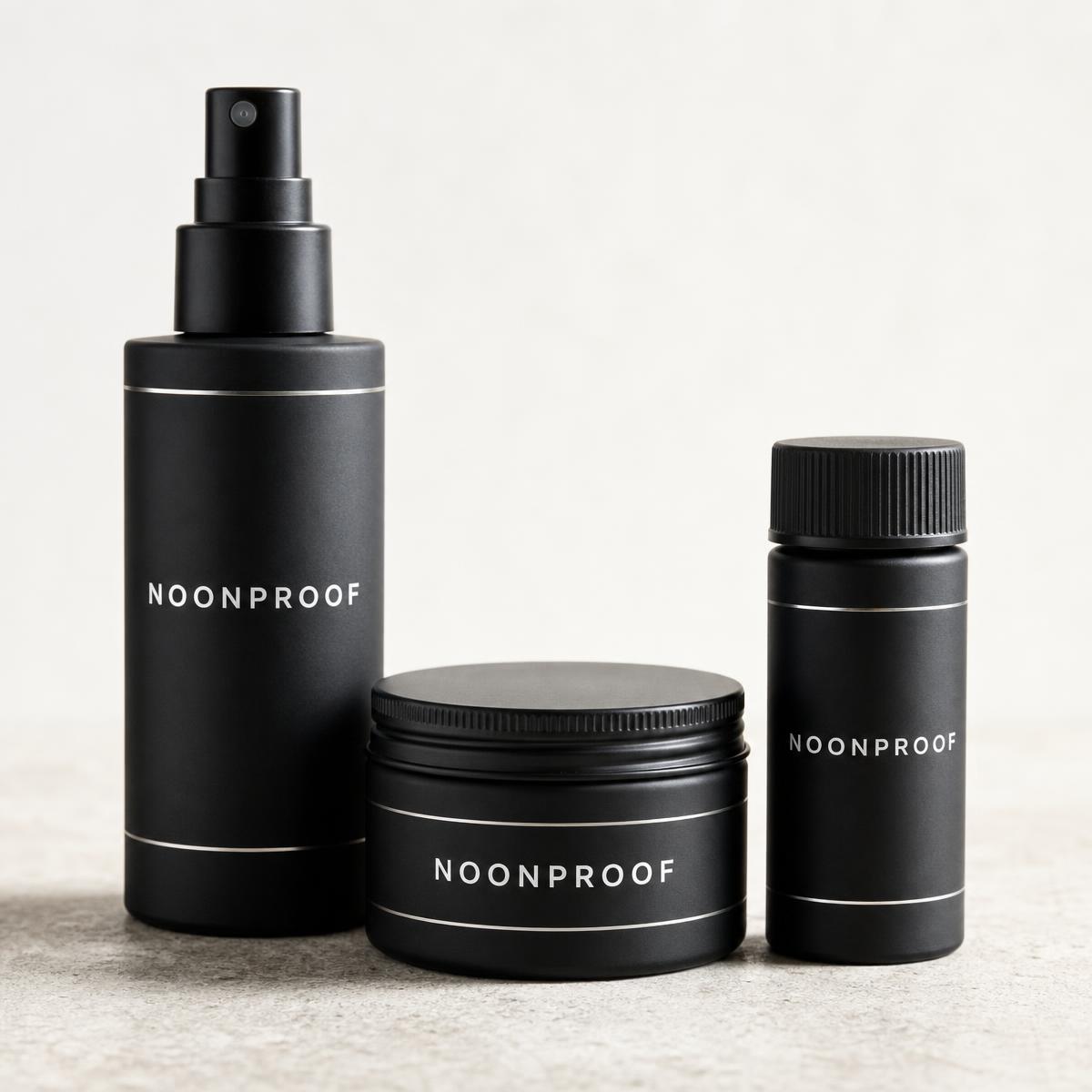
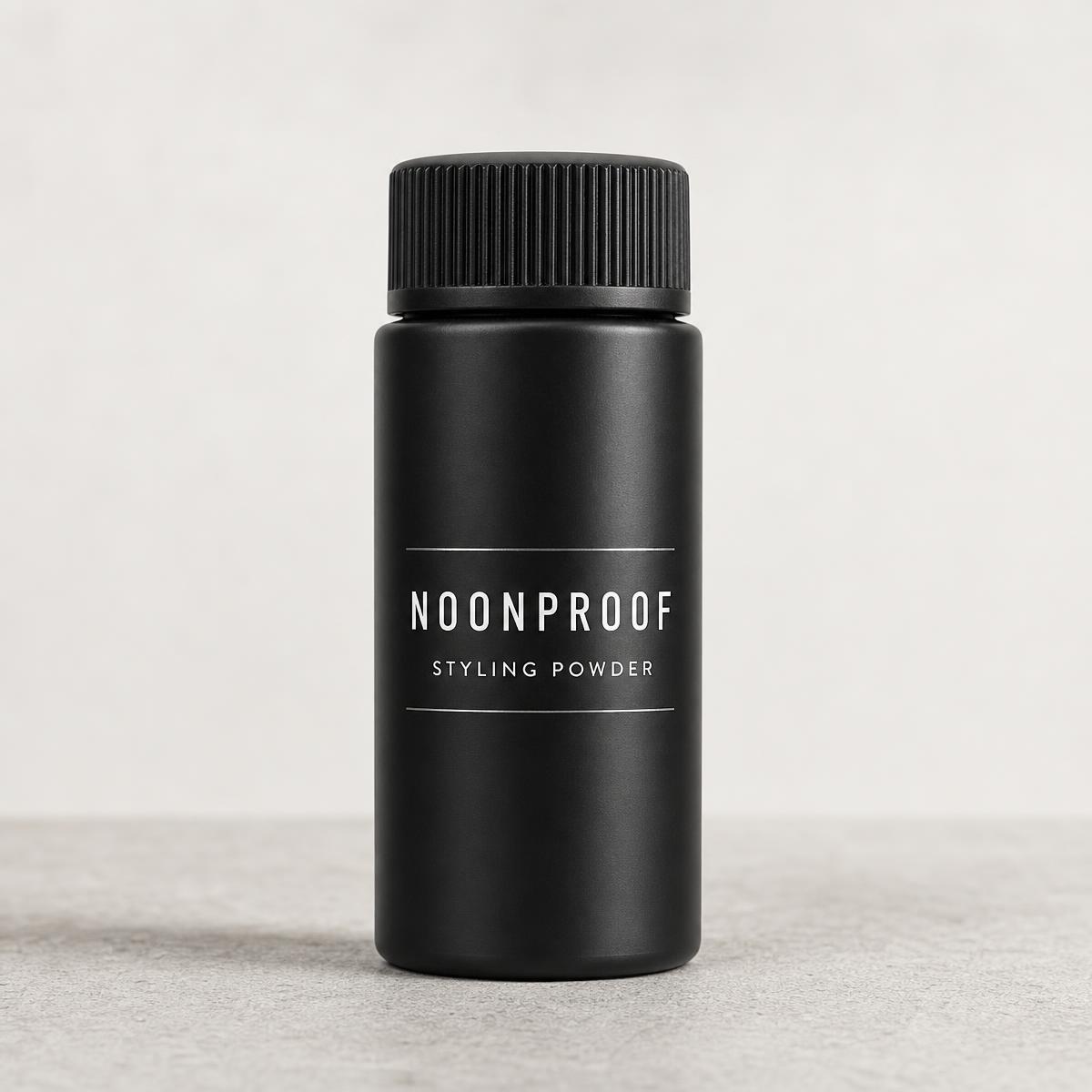
| Hair powder | One light shake, root only | At the scalp in the flattest areas |
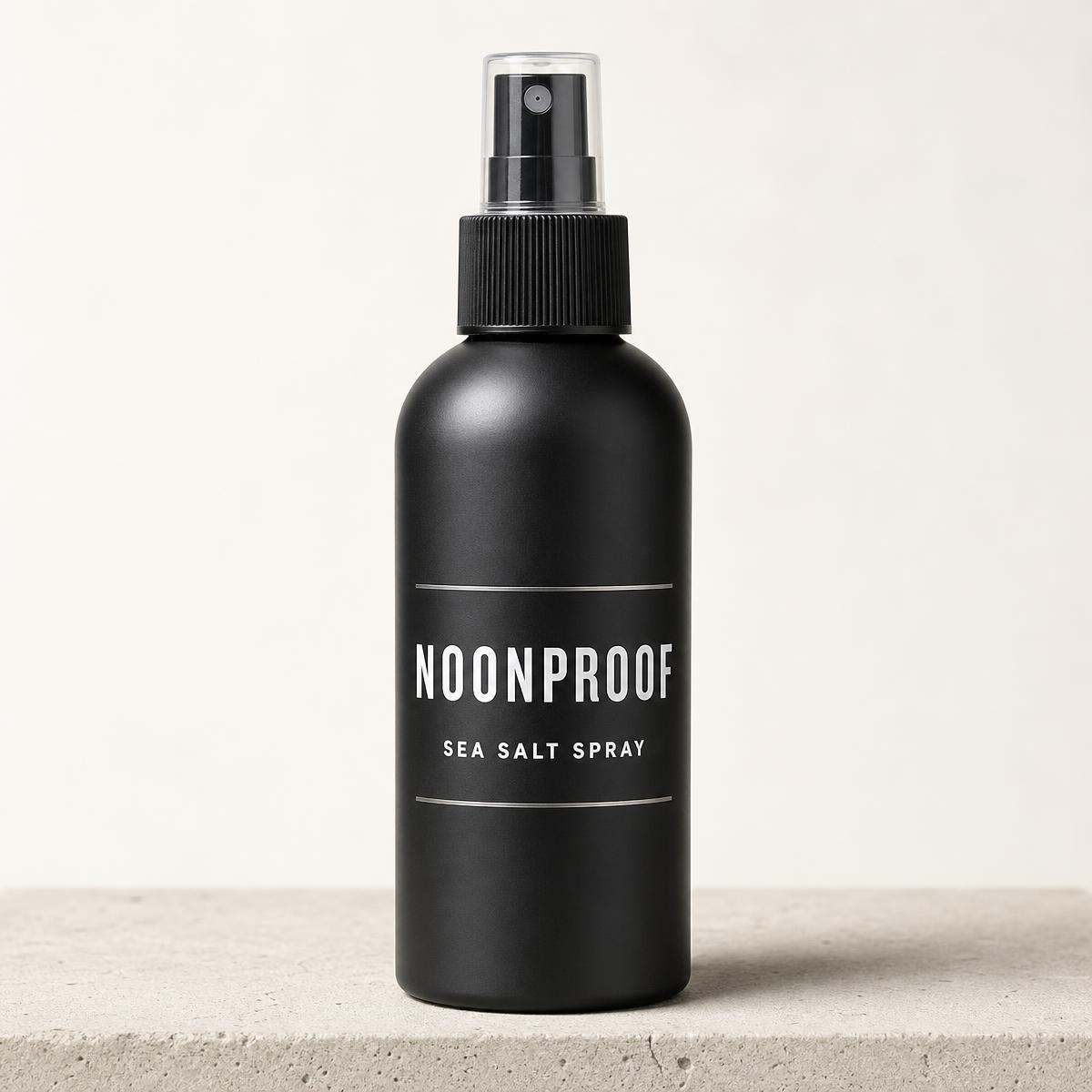
| Sea salt spray | Two sprays on damp hair | Mid-length, before drying |
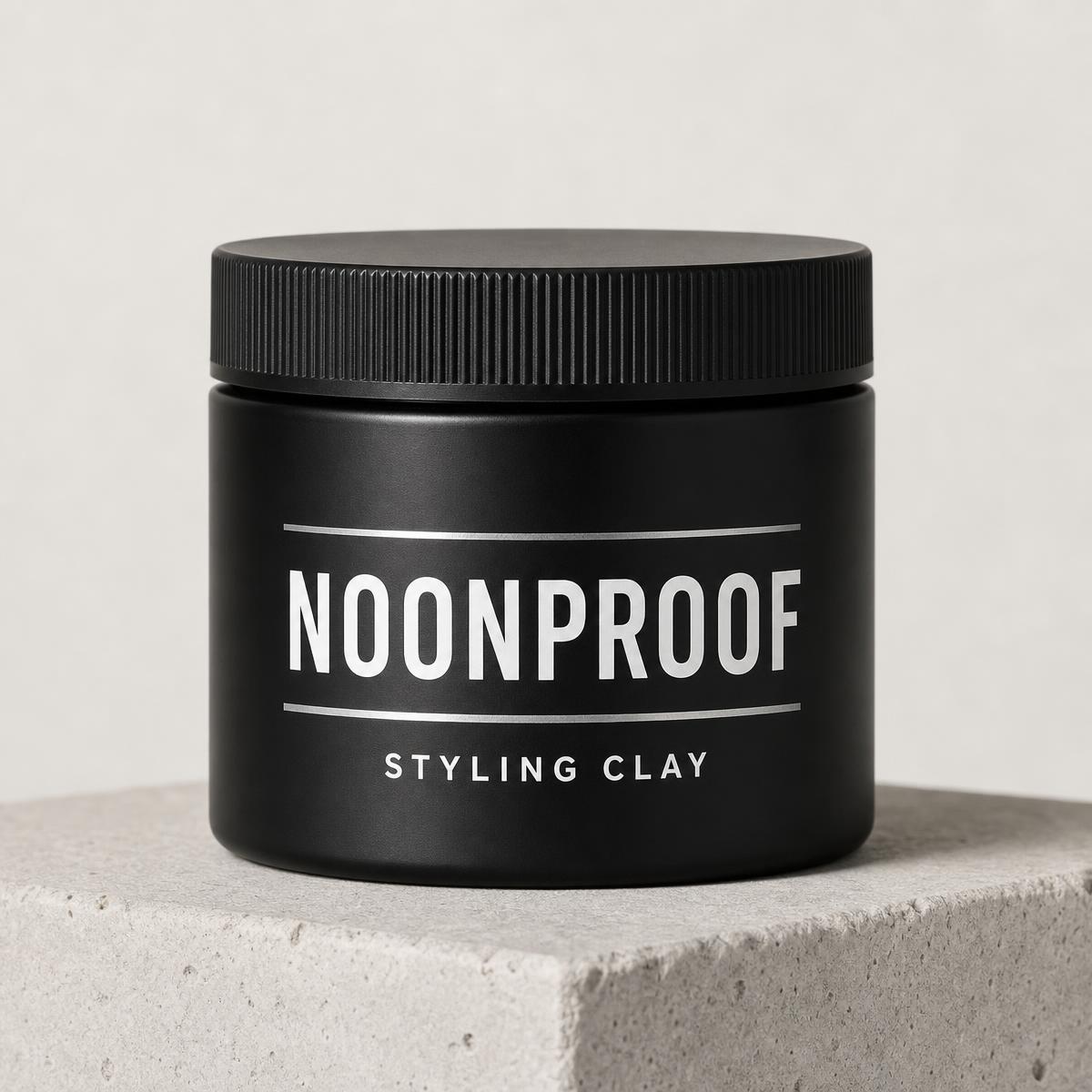
| Clay or paste | A grain of rice, emulsified fully | Fingertips only, at the root |
Emulsify anything creamy between your palms until you can barely see it, then apply with fingertips at the scalp. Do not run your palms over the top of your head — that is the single most reliable way to flatten fine hair and coat the lengths at the same time.
And leave the ends alone. Product on the last few centimetres of a fine strand adds weight where it does nothing useful.
Powder is the tool that suits fine hair best
For fine hair specifically, a dry powder does what a cream cannot: it creates friction at the root with effectively no weight. Strands sit apart from each other instead of collapsing into a sheet, and because there is no film, there is nothing to go crunchy.
Apply it in the flattest place first, usually the crown, then a little at the part. Shake a small amount directly at the scalp, wait a moment, then work it in with fingertips and lift. It will feel slightly gritty for a few seconds and then disappear.
The common mistake is applying it like a cream — over the surface, everywhere. Powder belongs underneath, at the root, in the specific areas that drop.
If it still goes flat
Check these in order before buying anything else:
- Did the hair dry fully at the root? Slightly damp roots collapse within the hour no matter what is on them.
- Are you touching it? Fine hair loses shape from contact faster than any other type. See why your hair gets greasy when you touch it.
- Is conditioner going on the scalp? On fine hair, conditioner belongs on the lengths only. At the root it is added weight.
- Is there residue from yesterday? Fine hair shows build-up sooner than thick hair. A proper reset wash makes the next style behave.
If volume holds until early afternoon and then drops, that is normal wear rather than failure — a dry root reset takes thirty seconds and is covered in restyling midday.
Keep reading
Related guidance
Filter the library by the problem you are solving, your hair type, or the technique you want to get right.
 Volume & Root Lift
Why Thick, Straight Hair Falls Flat by Midday
Thick hair has the mass to hold a shape but none of the structure. Here is why it collapses a few hours in, and how to set the root so it does not.9 min read Application Technique
How Much Hair Product Should You Actually Use?
Most men use two to three times more than they need. Dosage, distribution and how to tell you have overdone it.8 min read Oil Control
Why Your Hair Gets Greasy When You Touch It
Every pass of your hand moves oil from your scalp down the strand and thins whatever product is holding your style. Here is the honest picture, and how to restyle without making it worse.8 min read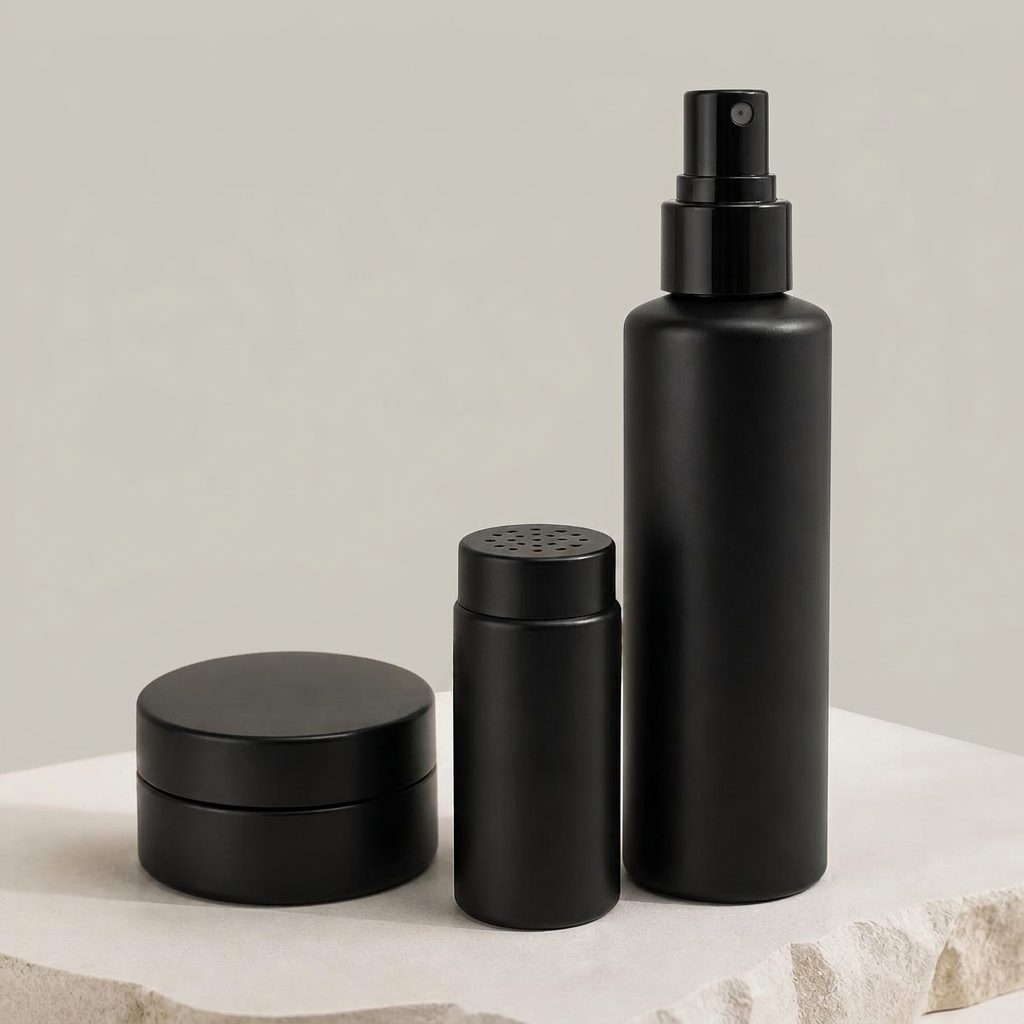 Product Education
Styling Clay vs. Hair Powder vs. Sea Salt Spray
Three products, three genuinely different jobs. A direct comparison on hold, finish, weight and who should skip each one.9 min read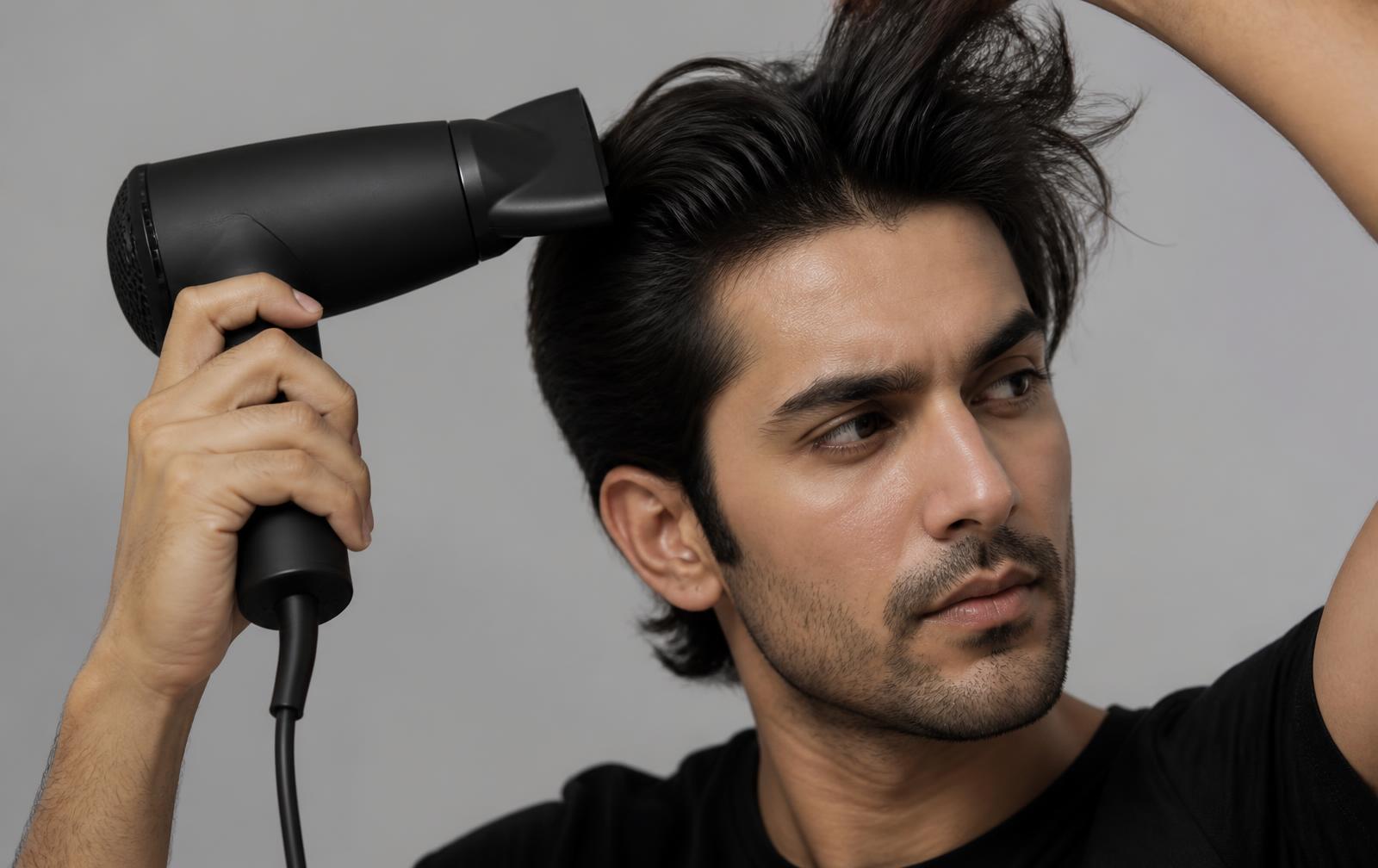 Blow-Dry Technique
How to Blow Dry Men's Hair for More Volume
A step-by-step blow-dry method for men who want height at the root instead of a flat, glued-down finish — and the reason technique beats product here.8 min read