


Product Education
Styling Clay vs. Hair Powder vs. Sea Salt Spray
Three products, three jobs. This is what clay, powder and sea salt spray are each built for, and how to choose between them for your hair type.
The short answer
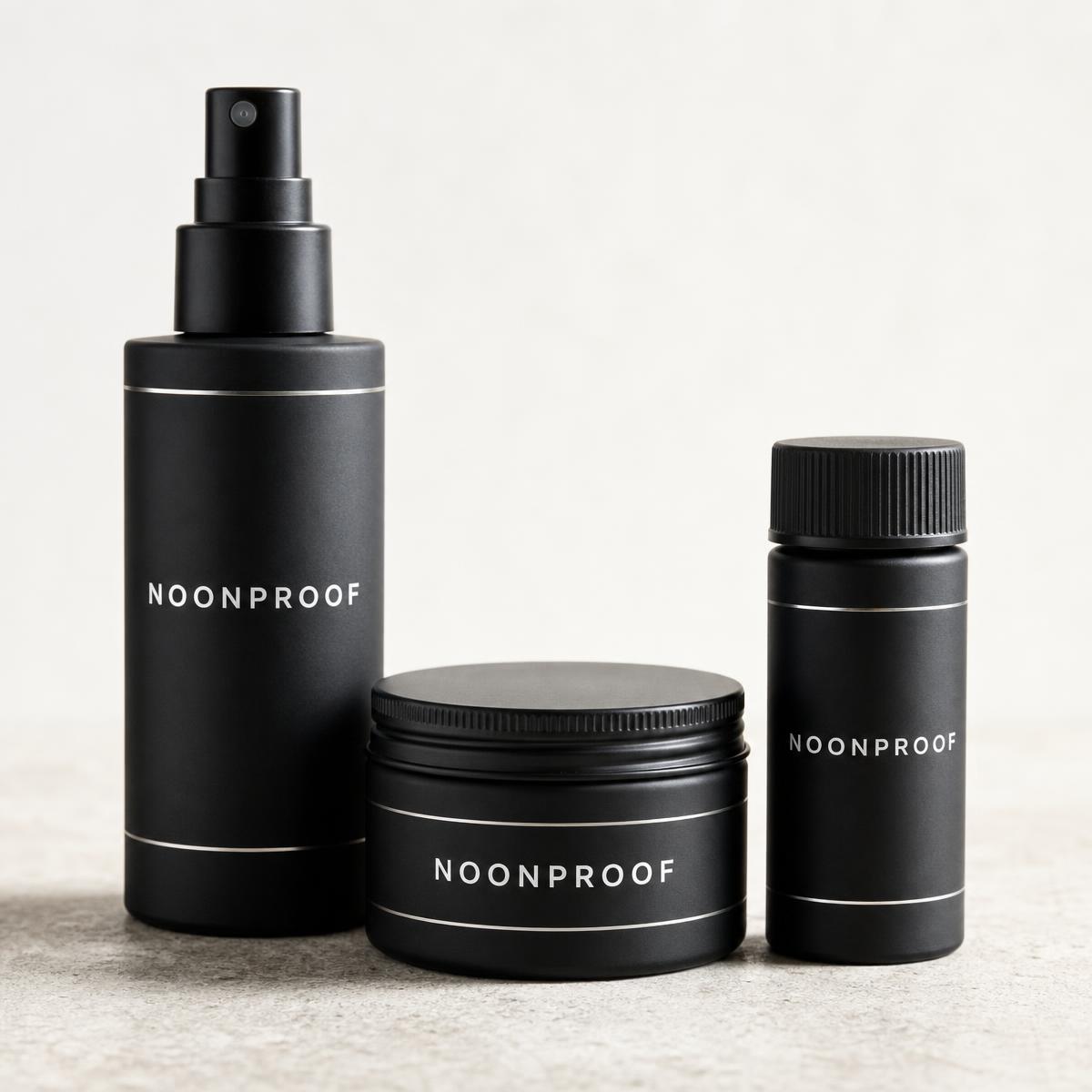
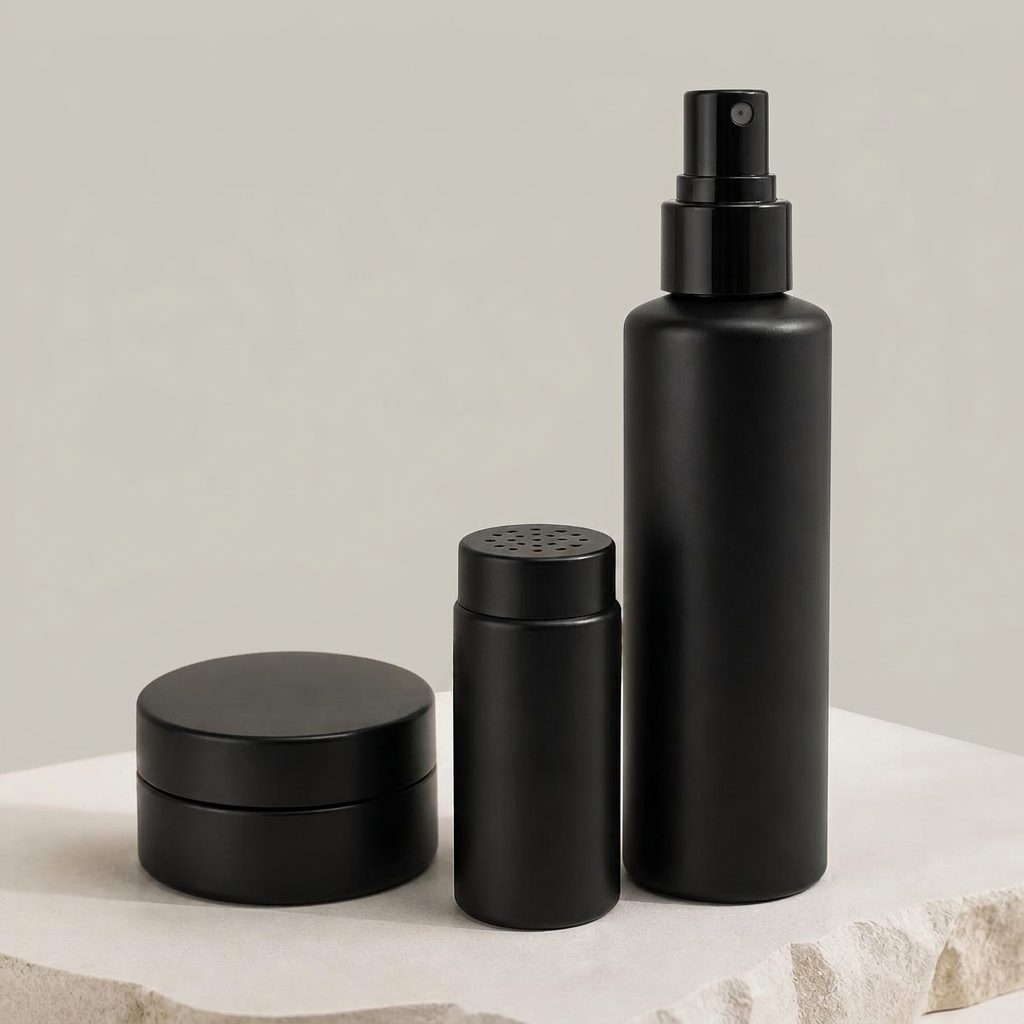
Styling clay shapes and controls: it is the product you reach for when you want a defined style to stay where you put it, with a matte finish. Hair powder lifts and mattifies: it works dry, sits at the root, and adds volume and grip without weight. Sea salt spray prepares: applied to damp hair, it builds texture, grip and separation before the style is set.
Most people need one of the three for their everyday style. When you do use all three, they follow the NoonProof system: prepare with spray, build the shape with clay, then refresh at the root with powder later in the day. Powder can also be used on its own for quick root lift or a matte finish.
Key takeaways
- Sea salt spray is a preparation step, used on damp hair before drying.[1]
- Styling clay is the shaping product: structure, control and primary hold.[1]
- Hair powder restores root lift, texture and oil control — and works on its own too.[1]
- Finish matters as much as hold: all three are designed to avoid a wet, shiny look.[1]
- Denser hair usually needs a firmer product; finer hair usually needs less of everything.[1]
- The system order is prepare, build, refresh. Not all three every day.[1]
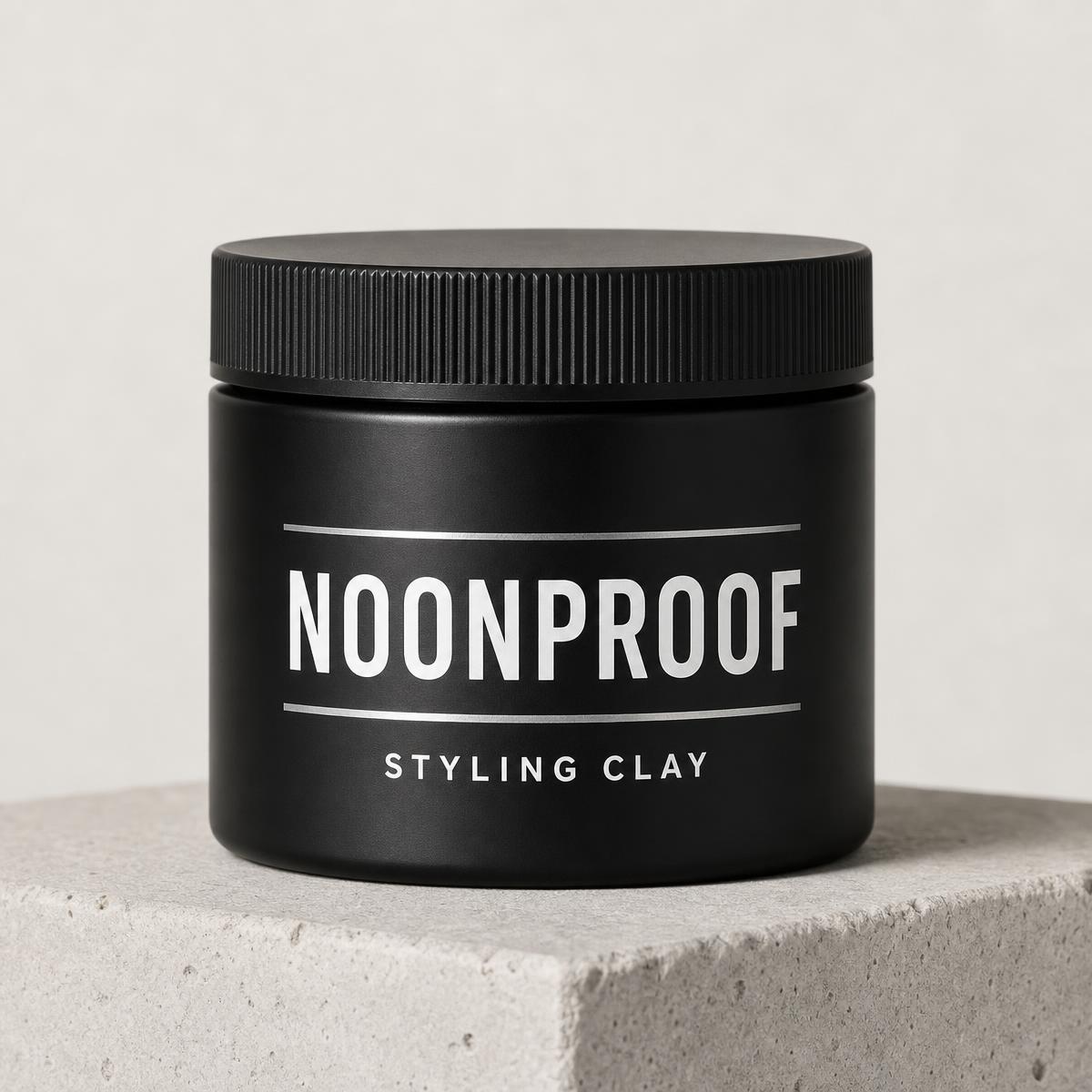
What styling clay does
Clay is a shaping product. Its job is to let you build a defined structure — a part, a swept shape, a lifted front — and keep it recognisable for the rest of the day, with a dry, matte surface rather than a shine.
Practically, clay gives you more resistance than a cream and more reworkability than a wax. You can move hair into position and it stays there, but you can usually reshape it later without starting from scratch. That combination is why it suits thick hair: dense hair needs something with enough body to hold a position against its own weight.
Best suited to
Short to medium lengths, thick or coarse hair, and styles that depend on a clear shape rather than loose movement. It is also the most forgiving choice if your hair tends to fall out of position by the afternoon.
How to apply it
Take a small amount — smaller than you think — and emulsify it between your palms until it warms and thins out. Apply from the back forward, through the mid-lengths first, and only bring your hands to the root area at the end, using whatever is left. Loading clay straight into the roots is the most common way to lose volume.
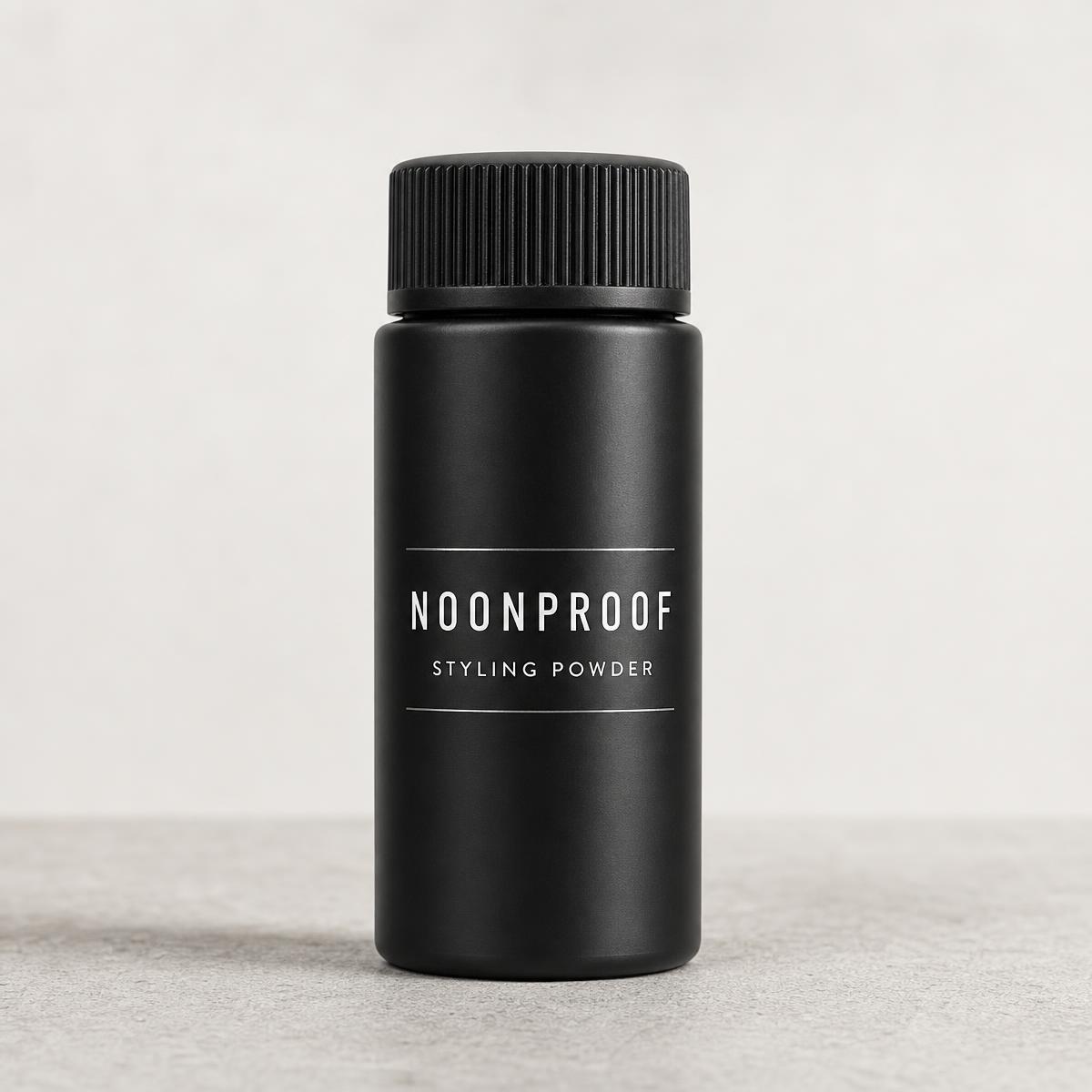
What hair powder does
Powder is a lift and finish product. It is applied dry, sits mostly at the root, and adds grip between strands so they hold apart from one another instead of collapsing into a single mass.
Because it adds almost no weight, powder is often the right answer when the problem is specifically flatness. It also mattifies, which is why it doubles as a midday reset for hair that has started to look oily or heavy at the root.
Best suited to
Anyone whose main complaint is a lack of root lift, hair that reads as shiny or weighed down by early afternoon, or styles that need volume and texture but not a rigid shape.
How to apply it
Work on dry hair only. Tap a very small amount into your palm or directly at the root, then work it in with your fingertips at the scalp and shake the hair out. Distribution is everything: powder concentrated in one spot can look chalky, while the same amount spread across three or four root sections disappears completely.
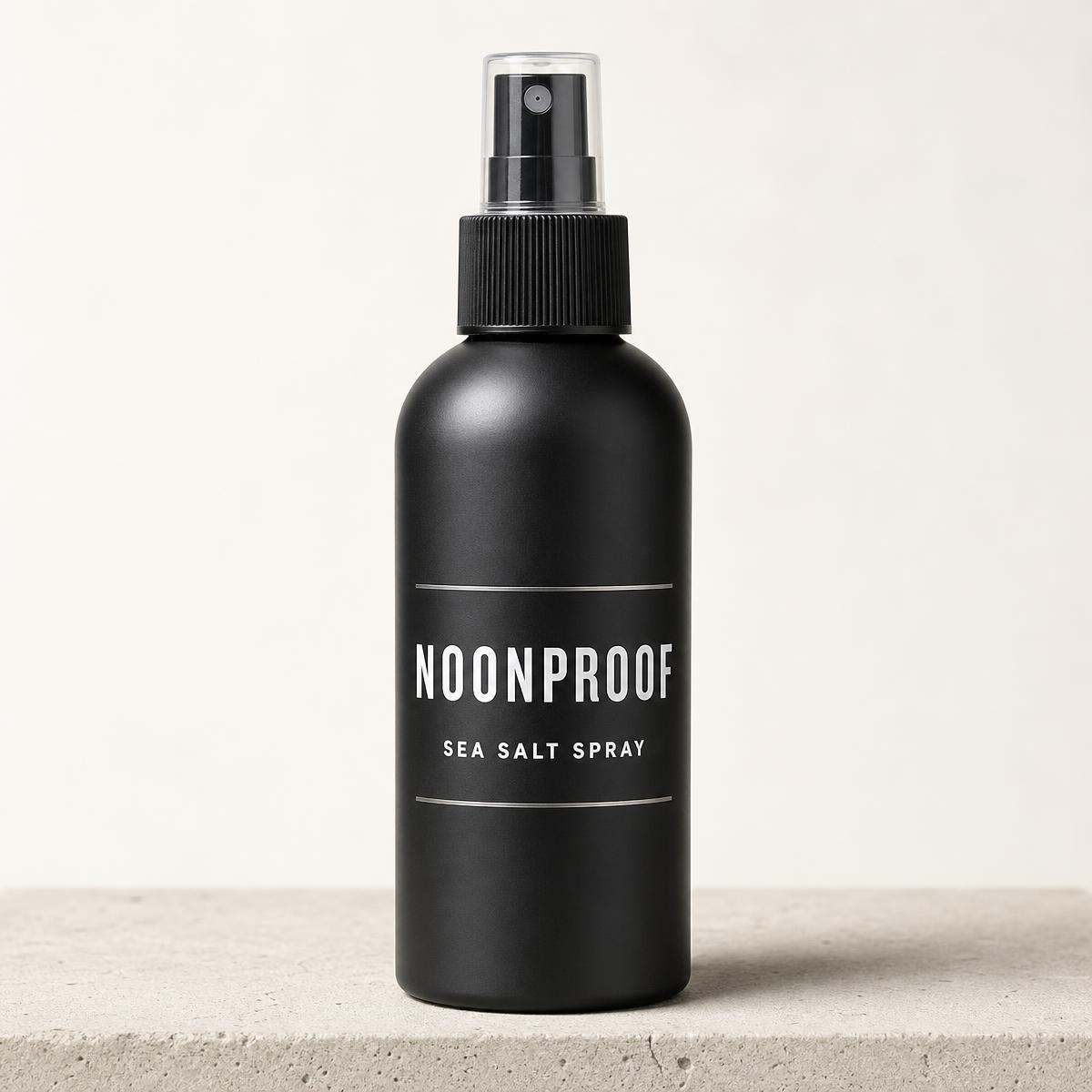
What sea salt spray does
Sea salt spray is the preparation stage. Applied to damp hair before drying, it adds texture and grip so the hair has something to hold on to when you shape it. It also encourages separation, which is what makes a style read as textured rather than smooth.
On its own, spray gives a loose, undone finish with light hold. Under a dryer, it becomes a foundation: the shape you build sets more decisively because the hair is no longer perfectly slippery.
Best suited to
Straight, fine or slippery hair that will not hold a shape; anyone wanting a relaxed textured look; and as the first step in a fuller routine for dense hair.
How to apply it
Mist evenly across damp hair from roughly 15–20 cm away, then scrunch or comb it through so it reaches the mid-lengths as well as the surface. Then dry. Spraying onto fully dry, styled hair mostly re-wets the surface and can pull the shape down.
Hold, finish and texture compared
| Sea salt spray (01 Prep) | Styling clay (02 Build) | Hair powder (03 Refresh) | |
|---|---|---|---|
| Applied to | Damp hair | Dry or nearly dry hair | Dry hair |
| Main job | Texture and grip | Shape and control | Root lift and matte finish |
| Hold | Light | Medium to strong | Light to medium |
| Finish | Natural, textured | Matte | Dry, matte |
| Weight | Very light | Light to moderate | Very light |
| Stage in routine | Preparation | Shaping | Lift and refresh |
How hair type changes the answer
The same product behaves differently on different hair, so the honest answer to "which is best" depends on what your hair does without help.
- Thick and straight: weight is the enemy. Prepare with spray, use clay sparingly for shape, and keep powder for a root reset during the day.
- Thick and wavy: texture is already there. Clay usually does most of the work, with powder only where the root drops.
- Fine but dense: powder on its own is often enough. Even small amounts of a heavier product can flatten fine strands.
- Coarse and resistant: preparation matters most — dry with intent, then use clay for structure.
- Longer lengths: shift product toward the mid-lengths and surface, and expect to need more distribution rather than more product.
When one product is enough
If your hair holds a shape reasonably well and your only issue is finish, one product is enough. Choose based on the single thing you want to change: flatness points to powder, shapelessness points to clay, slipperiness points to spray.
Adding products you do not need is one of the quickest ways to end up with a heavy, overloaded style — the exact problem most people are trying to solve.
When layering makes sense
Layering is worth it when the three stages are genuinely solving different problems. The order is what makes it work.
- 1. Prep. Sea salt spray on damp hair, then blow-dry with lift.
- 2. Build. A small amount of emulsified clay through the mid-lengths and surface, once the hair is dry and cool, to set structure and hold.
- 3. Refresh. A trace of powder at the root when the style drops during the day, to restore lift, absorb oil and revive texture.
Powder does not have to sit inside that sequence. Used on its own it is a quick root lift and matte finish — the point is that the NoonProof routine builds the shape with clay before powder refreshes it.
Use less of each product than you would if it were the only one. Three full applications stacked on top of one another will feel heavy no matter how light the individual products are.
If you want the full three-stage routine in one go, build your system and adjust the amounts over the first week until it feels right.
Sources and editorial status
This comparison describes what each product category is designed to do and how the products are intended to be used. It does not report testing results, hold-duration measurements or comparative performance data, because none was reviewed for this article.
Product behaviour varies with hair length, density, condition and climate. Always follow the instructions on the specific product you are using.
General styling guidance from the NoonProof editorial team. This article is not medical advice and does not describe verified product testing.
Choosing between them
If you want lift and oil control, start with Styling Powder. If you want strong matte shape, Styling Clay is the shaping product. For texture and grip before you dry, use Sea Salt Spray.
Build your own routine if you want all three stages, or take the Hair Quiz for a recommendation based on your hair.