


Oil Control
Why Your Hair Gets Greasy When You Touch It
8 min readReviewed by the NoonProof editorial team
Quick answer
Why does my hair get greasy when I touch it?
Touching your hair moves sebum from the scalp down the strand and redistributes it across the surface, so hair that looked clean an hour ago reads greasy within a few passes. Your hands also carry their own oil and break up the texture holding your style. Cut the number of contacts, restyle dry at the root rather than through the lengths, and use a dry, powder-style product instead of adding more cream.
Key takeaways
- Oil sits at the scalp until something moves it; your hand is the fastest transport mechanism you own.
- Fingers also flatten the texture that separates strands, so a style loses volume and gains shine at the same time.
- Most men touch their hair between twenty and forty times a day without noticing — that, not their scalp, is the variable they can change.
- Restyle at the root with dry fingers or a comb; never add cream product on top of a style that has already dropped.
What your hand is actually doing
Sebum is produced at the follicle, which means the oil in your hair starts life within a millimetre of your scalp. Left alone, it migrates down the strand slowly — gravity and ordinary movement carry it, and on straight hair that journey takes a few hours.
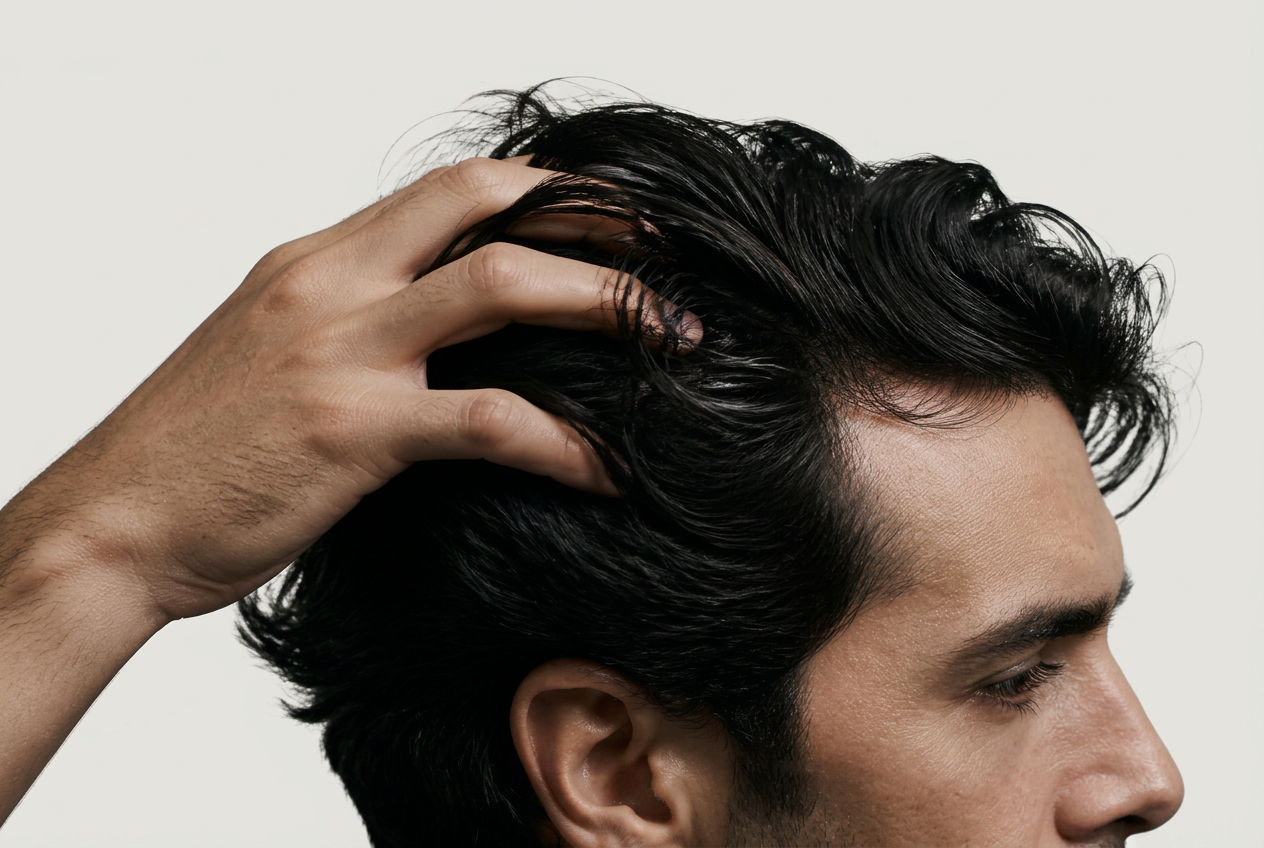
A hand changes that timeline instantly. When you push your fingers back through your hair you are dragging your fingertips across the oiliest part of your head and then pulling that oil the full length of every strand you touch. One pass does more redistribution than an hour of sitting still.
There is a second effect that matters just as much. Whatever product is holding your style works by creating friction between strands or a light film over them. Your fingers break both. So a single pass through your hair produces two changes at once: more visible oil, and less structure holding the shape up. That combination is why hair can look noticeably worse after you have 'fixed' it.
Your hands are not clean either
Skin on the hands and face produces its own sebum, and by mid-morning your palms have picked up whatever else you have handled — a phone screen, a steering wheel, food. That transfers into the hair along with the scalp oil already being moved.
This is the part most men underestimate. If you rest your head on your hand at a desk, run your fingers along the hairline while thinking, or check the front of your hair in a reflective surface, each contact adds a small deposit. The individual amounts are trivial. Forty of them are not.
Why the crown and hairline go first
Oil shows up unevenly, and it is not random. The hairline and the crown are the two places hands land most often — the hairline because it is the part you can see and adjust, the crown because it is where you push hair back from.
Those are also the two areas where volume matters most, so the loss is doubly visible. Flattened, shiny hair at the front of your head reads as 'my hair is greasy' even when the rest of your head is completely fine.
If your hair looks acceptable in a mirror from the side but wrong from the front by lunchtime, touching is almost certainly the cause rather than your scalp.
What to change, in order of impact
- 01Reduce contacts before anything else. Nothing you apply will out-perform not touching. Identify your two most common triggers — usually a nervous habit and a mirror check — and remove those specifically.
- 02Give your hands a substitute. Habits are easier to redirect than to stop. A comb in a bag or drawer means the fix becomes a deliberate action rather than a reflex.
- 03Restyle at the root, not through the lengths. When the shape has dropped, lift at the scalp with fingertips or a comb and leave the ends alone. The lengths are where the oil is most visible; the root is where the volume actually lives.
- 04Do not add cream on top. A second layer of clay or cream on a collapsed style adds weight to a root that has already given up, and it will read as grease within the hour. If you need help in the afternoon, use something dry.
- 05Keep the morning dose light. Overloaded hair feels coated, and coated hair invites touching. The two problems reinforce each other.
The afternoon reset that works
This takes under a minute and does not require a mirror you can see the back of.
- 01Dry hands. Wipe them first if you have been eating or handling anything.
- 02Push fingertips into the hair at the scalp, not through the lengths, and lift in short movements across the crown.
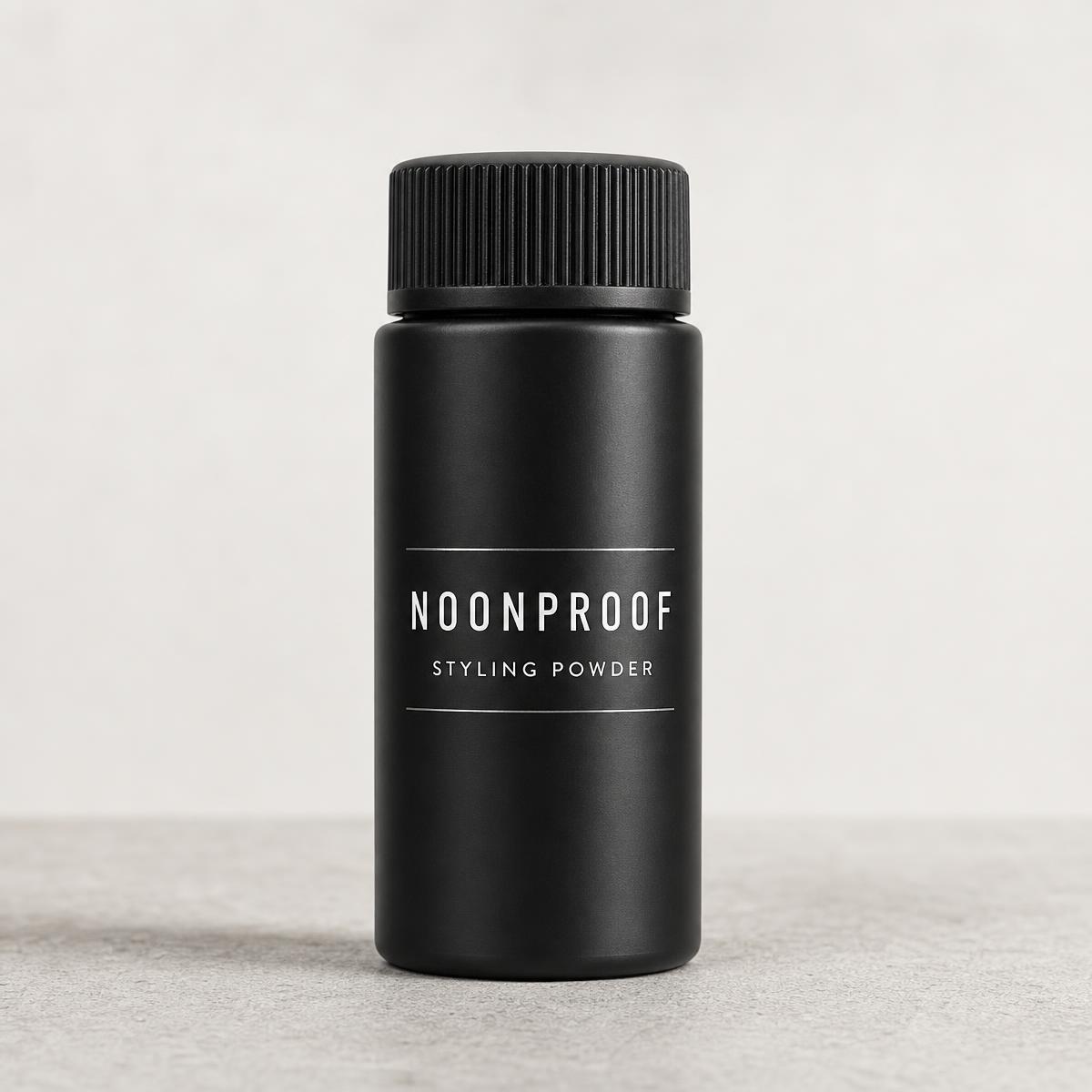
- 03If you carry a product for this, use a small amount of powder shaken directly at the roots in the flattest area, then lift again. Powder adds grip without adding oil, which is the whole point.
- 04Comb the front into direction rather than pushing it with your palm.
What you are doing is restoring the root angle and adding friction back. What you are avoiding is spreading oil down the strand and adding weight.
When touching is not the problem
Be honest about which pattern you actually have. If your roots look oily within two or three hours of washing even on a day you barely touched your hair, the issue is timing and washing rhythm rather than contact — that is covered in why your hair becomes oily by noon.
If the hair feels coated and heavy from the moment you finish styling, the amount of product is the more likely cause: see how much hair product you should actually use.
And if the real complaint is that the shape drops rather than that it shines, the root set is the thing to fix, not the oil — start with why thick, straight hair falls flat by midday.
Keep reading
Related guidance
Filter the library by the problem you are solving, your hair type, or the technique you want to get right.
 Oil Control
Why Your Hair Becomes Oily by Noon
Your scalp is not the problem. Oil transport, touching and product placement decide whether your roots read clean at 2pm.8 min read Wash Routine
How Often Should You Wash Your Hair?
There is no universal number. Wash frequency is decided by how quickly your scalp produces oil, how much product you use, and how much you sweat — and the honest answer for most men is fewer full washes than they think.9 min read Fine Hair
How to Get Volume in Fine Hair Without It Going Crunchy
Fine hair lifts easily and gets overwhelmed just as easily. The trick is grip without weight — and far smaller amounts than you think.8 min read Application Technique
How Much Hair Product Should You Actually Use?
Most men use two to three times more than they need. Dosage, distribution and how to tell you have overdone it.8 min read