


Wash Routine
How Often Should You Wash Your Hair?
9 min readReviewed by the NoonProof editorial team
Quick answer
How often should I wash my hair?
Most men do best washing with shampoo every two to three days, rinsing with water on the days in between. Oily scalps, daily training or heavy daily product use push that toward daily washing; dry scalps and low product use push it to twice a week. The signal to follow is the scalp, not the lengths: wash when the roots feel oily or coated, and use a water-only rinse plus a dry root reset the rest of the time.[1]
Key takeaways
- There is no correct universal frequency — oil production, product load and sweat set your number.[1]
- Two to three days between shampoos suits most men; judge by the scalp, not by the ends.[1]
- Washing less does not train your scalp to make less oil, but it does stop stripping and rebound drying.[1]
- Water-only rinses handle sweat and reset a style without removing everything.[1]
- Residue that has built up over several days needs a proper reset wash, not a heavier styling product.[3]
Why there is no single right answer
Wash frequency advice gets repeated as though it were a rule — every day, every three days, once a week — and none of it survives contact with individual variation.
Three things actually decide your number. The first is how much sebum your scalp produces, which is set by physiology and hormones rather than by habit. The second is how much styling product you apply and how easily it comes out. The third is how much you sweat, which is a function of climate and training rather than hair care.
A man with an oily scalp who trains daily and uses clay every morning has a genuinely different requirement from a man with a dry scalp, a desk job and a light powder routine. Both are told the same thing by the internet. Only one of them is right.
A starting point by scalp type
| Scalp and routine | Shampoo frequency | Between washes |
|---|---|---|
| Oily scalp, daily product, daily training | Daily or every other day | Water rinse, light root reset |
| Normal scalp, regular styling | Every 2–3 days | Water rinse plus powder at the root |
| Dry scalp, minimal product | Every 3–4 days, or twice weekly | Water rinse only |
| Heavy clay or pomade user | Every 2 days, clarifying weekly | Full rinse and re-dry |
Treat these as starting positions rather than targets. Move by one day at a time and give any change about two weeks before deciding it has failed.
Read the scalp, not the lengths
The most common mistake is judging cleanliness by how the hair looks. Hair looks oily because oil has been moved down the strand, and that can happen from touching alone hours before your scalp is actually dirty.
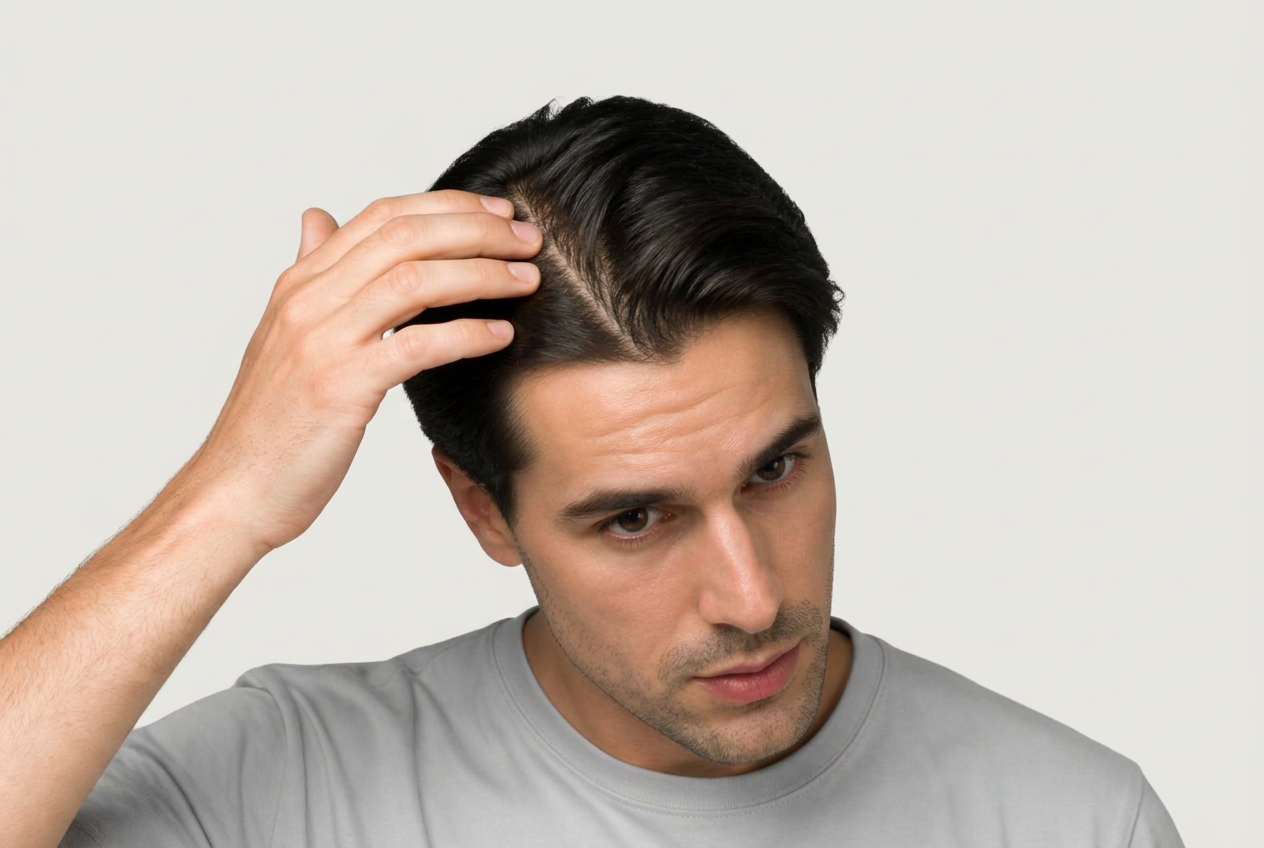
Press your fingertips into the scalp at the crown and along the hairline. If the skin itself feels slick or coated, it is time to wash. If the skin feels normal and only the lengths look shiny, you have a redistribution problem, not a washing problem — which is covered in why your hair gets greasy when you touch it.
The second signal is behaviour. Hair that will not take a shape, feels coated when you work product into it, or goes limp within an hour of styling is usually carrying residue. That is a wash signal even if nothing looks wrong.
What over-washing actually does
Shampoo works by surfactant action: it lifts oil and residue off the hair and scalp so water can carry them away. Strong formulas remove more, which is exactly what you want occasionally and not what you want every day.
When you strip the scalp daily with an aggressive shampoo, the immediate result is hair that feels squeaky and dry — and dry hair with an irritated scalp is harder to style, not easier. The common experience is hair that feels clean at 8am and reads greasy by 2pm, which sends people toward washing even more often.
The correction is worth being precise about. Washing less frequently does not retrain your scalp to produce less oil; sebum output is not controlled by your shower schedule. What changes is that you stop the strip-and-rebound cycle, and the oil you do have distributes across a strand that is not parched. Hair in that state styles better and stays put longer.
Under-washing has a cost too
The opposite extreme has become fashionable and it fails in a specific way: build-up.
Styling products, sebum, sweat salts and environmental grime accumulate on the hair surface. Once that layer is thick enough, product stops working. Powder that used to add grip disappears into the residue. Clay slides instead of gripping. The hair feels heavy from the moment it is dry and refuses to hold a root angle.
When you are in that state, the instinct is to use more product. That makes it worse. The fix is a reset: one proper wash, ideally with a clarifying shampoo, and a full dry. Hair almost always styles best on the day after a reset wash, which is a useful diagnostic in itself.
The non-wash-day routine
Days between shampoos are where most of the benefit lives, provided you do something with them.
- 01Rinse with water. A warm-water rinse removes sweat and softens yesterday''s product without stripping the scalp. It also re-wets the hair, which is what lets you set the root again.
- 02Re-dry the roots. This is the step people skip. Air-drying on a non-wash day means the hair sets in whatever direction it fell, and no product will recover that.
- 03Use less product than on a wash day. There is still residue in the hair providing grip. A wash-day dose on day two produces heaviness.
- 04Reset with powder rather than cream. Dry grip at the root is what a second-day style needs; cream adds weight to hair that already has some.
If hair on day two consistently feels heavy rather than usefully textured, your wash-day dose is too high — see how much hair product you should actually use.
Adjusting for training, climate and season
Sweat changes the calculation, but not always toward more shampoo. Sweat is mostly water and salt; a thorough water rinse after training removes it and leaves the useful texture the salt provides. Reserve shampoo for the days the scalp genuinely feels coated.
Humid conditions increase both sweat and the temptation to apply heavier product, which builds residue faster. In hot months, most men shift one day more frequent and lean harder on dry root resets between washes; the mechanics are in how to keep your hair styled in humidity.
Cold, dry winter air pushes the other way. Scalps dry out faster, and the same schedule that worked in July can leave hair brittle in January. Dropping one wash a week is usually the whole adjustment.
Finding your number in two weeks
- Week one: wash on your current schedule and note, each afternoon, whether the scalp felt oily, normal or dry, and whether the style held.
- Week two: add one day between washes. Water-rinse and re-dry on the extra day.
- Read the pattern. If the scalp feels oily before the next wash, go back a day. If it feels normal and the style holds, try adding another day.
- Keep one reset. Whatever you land on, include one clarifying wash a week if you use clay or pomade daily.
Most men who run this end up somewhere between two and three days, with a water rinse in between — and with hair that behaves more predictably than it did on a daily schedule.
How we know this
- Sebum production and scalp physiology — Sebaceous glands attached to each follicle secrete sebum continuously; output rate varies by individual, hormones and climate rather than by wash schedule.
- Surfactant action in shampoo — Shampoos remove oil and residue by surfactant action; stronger clarifying formulas remove more, which is why they are used periodically rather than daily.
- NoonProof styling observations — Wash-frequency guidance based on in-house routine testing and customer feedback; presented as practical observation, not medical advice.
Last reviewed August 12, 2026
What this means for your routine
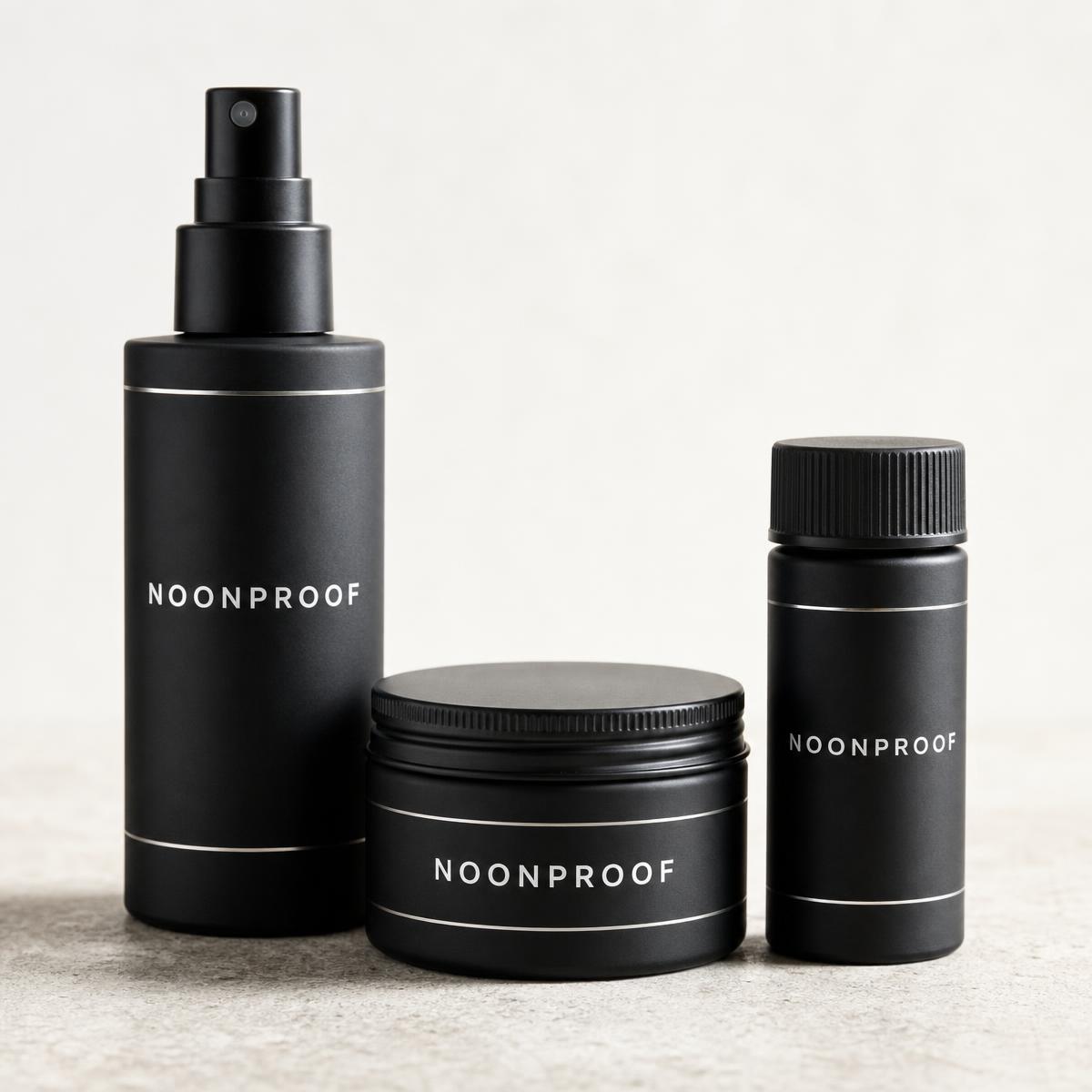
Where NoonProof fits
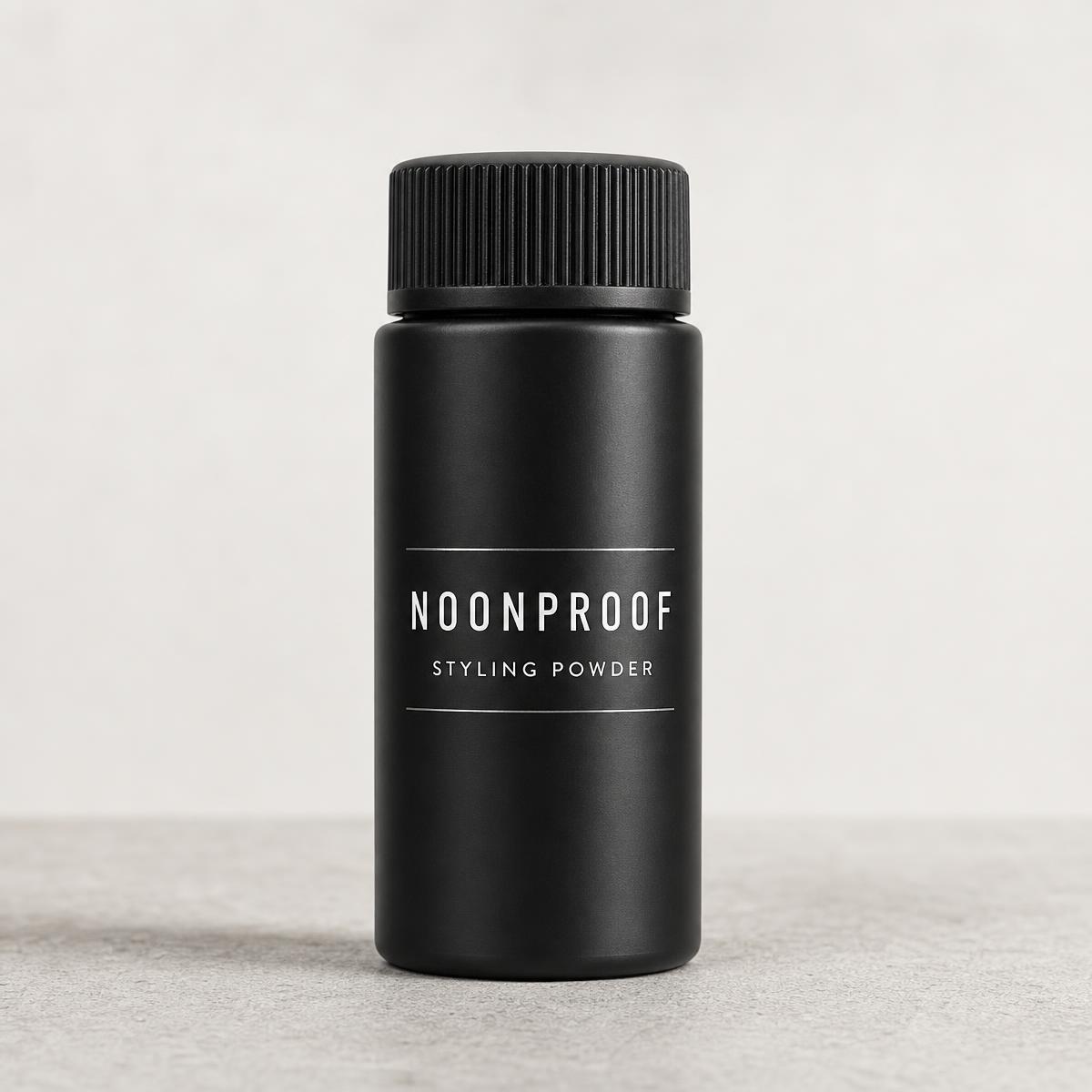
- Non-wash-day reset
NoonProof Styling Powder
Restores root grip on day two or three without adding the weight that makes unwashed hair read greasy.
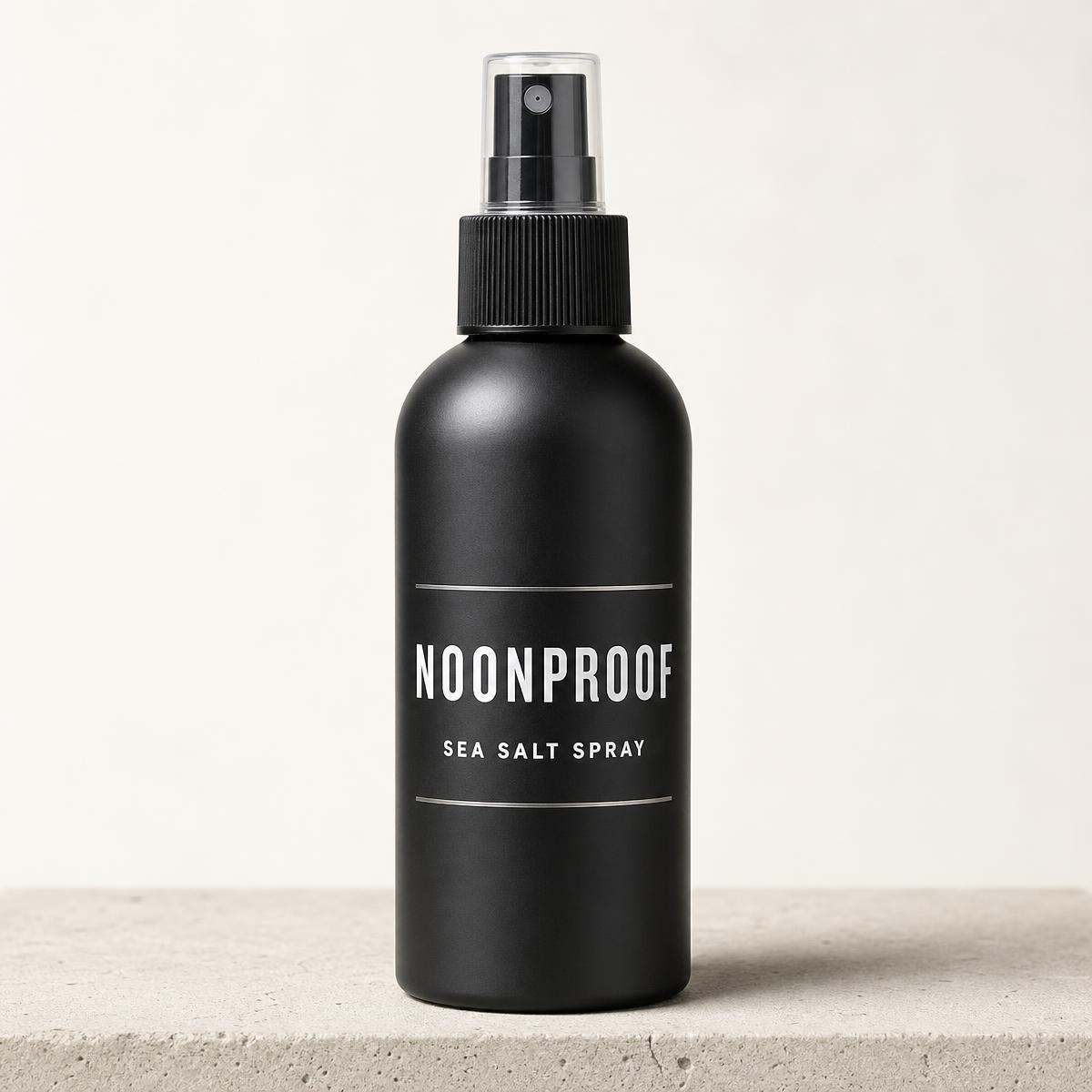
See Styling Powder - Post-rinse texture
NoonProof Sea Salt Spray
Rebuilds separation after a water-only rinse so a second-day style sets with structure instead of falling flat.
See Sea Salt Spray
Keep reading
Related guidance
Filter the library by the problem you are solving, your hair type, or the technique you want to get right.
 Oil Control
Why Your Hair Becomes Oily by Noon
Your scalp is not the problem. Oil transport, touching and product placement decide whether your roots read clean at 2pm.8 min read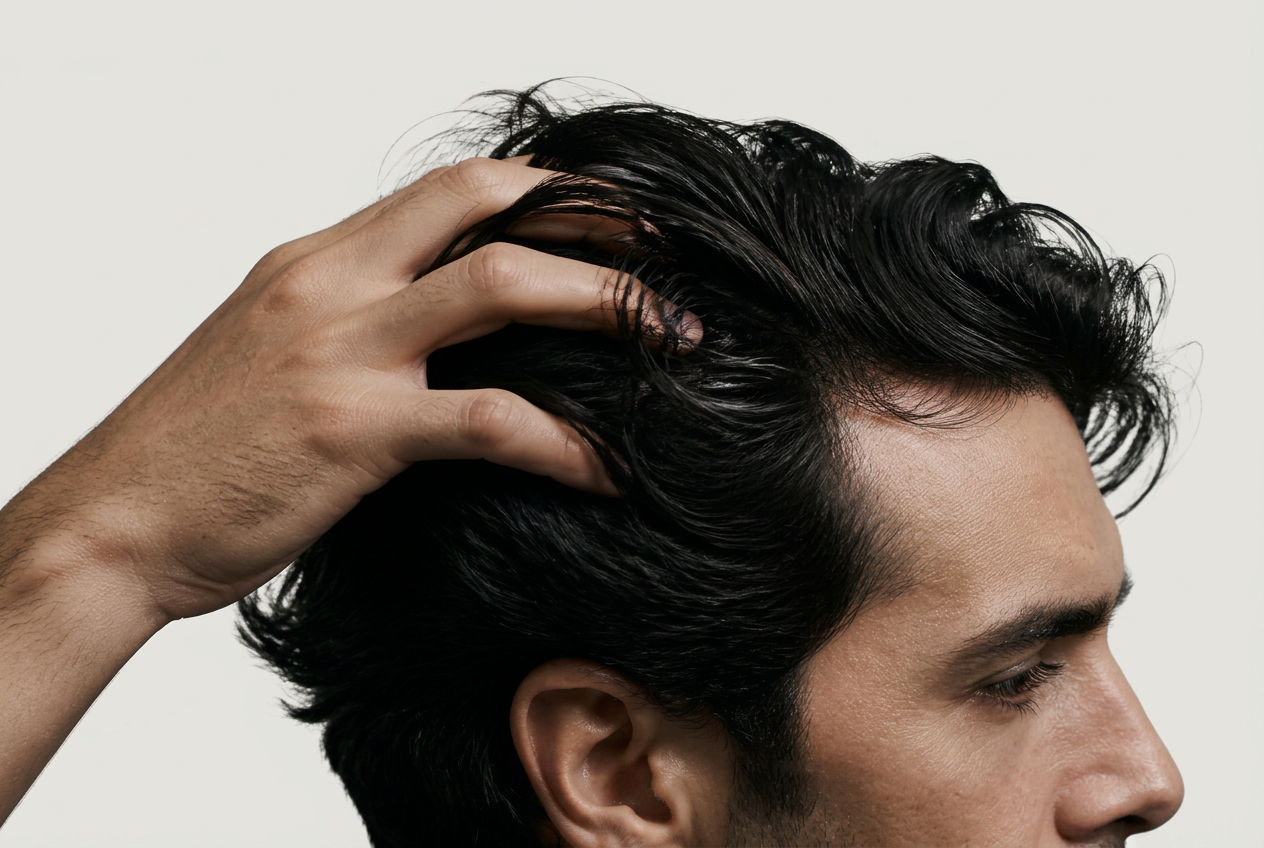 Oil Control
Why Your Hair Gets Greasy When You Touch It
Every pass of your hand moves oil from your scalp down the strand and thins whatever product is holding your style. Here is the honest picture, and how to restyle without making it worse.8 min read Application Technique
How Much Hair Product Should You Actually Use?
Most men use two to three times more than they need. Dosage, distribution and how to tell you have overdone it.8 min read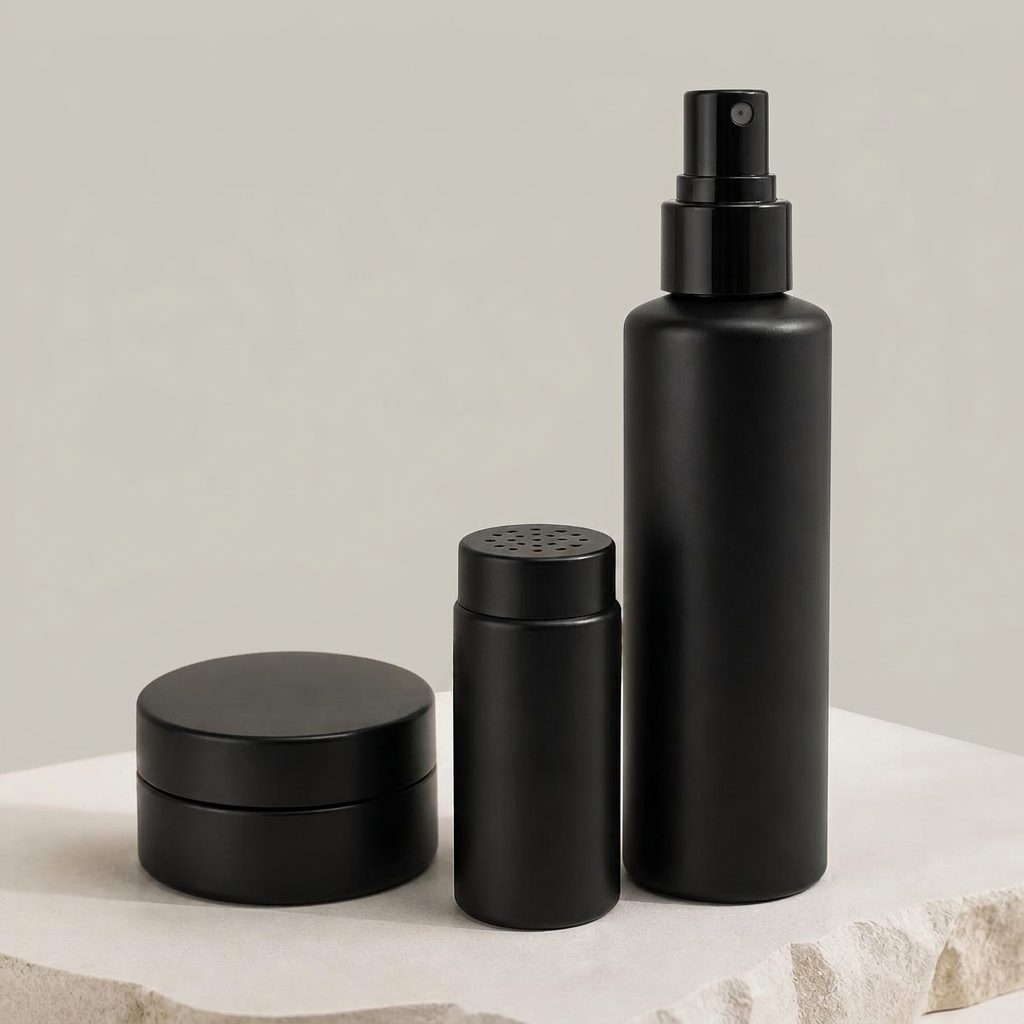 Product Education
Styling Clay vs. Hair Powder vs. Sea Salt Spray
Three products, three genuinely different jobs. A direct comparison on hold, finish, weight and who should skip each one.9 min read