


Application Technique
How Much Texture Powder Should You Use?
6 min readReviewed by the NoonProof editorial team
Quick answer
How much texture powder should I use?
Start with a very small amount — roughly what sticks to a fingertip, or one light tap of the bottle per section — applied directly to the roots of dry hair. Most men need less than they expect, and adding a second small amount is always easier than removing the first.[1]
Key takeaways
- Powder is measured in traces, not scoops or palmfuls.[1]
- It goes on dry hair, at the root, never through the lengths.[1]
- Short hair needs less; long or very dense hair needs more sections, not a bigger dose.[1]
- Gritty, dusty or itchy hair is the signal that you used too much.[1]
- Building up in two light passes beats one heavy one.[2]
The short answer, by hair length
Treat these as starting points, then adjust once — never twice in the same styling session.
- Short crops and fades. A trace on the fingertips, applied to the top section only.
- Medium length. One light tap per section, two or three sections across the top of the head.
- Longer styles. Same amount per section, more sections — the fix for length is coverage, not dose.
The test is touch, not appearance: hair should feel like it has more grip, not like it has a coating.
Where it goes
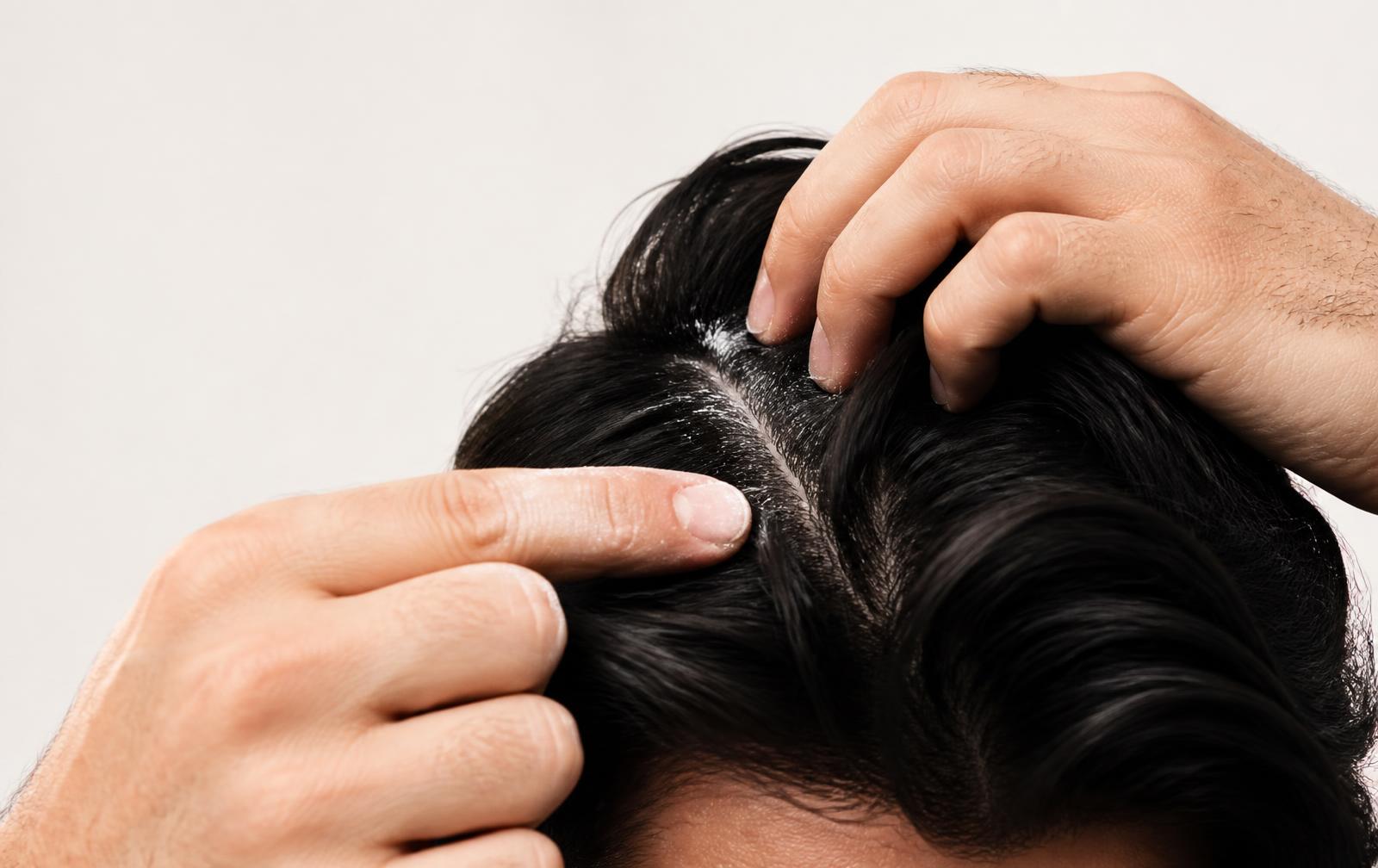
Powder belongs at the root, on dry hair.
- 01Part the hair to expose the roots of one section.
- 02Apply a trace directly to that root area.
- 03Massage it in at the scalp line with your fingertips, lifting as you go.
- 04Move to the next section and repeat.
- 05Shape the whole thing only once every section is done.
Powder in the mid-lengths and ends does very little for lift and is the main cause of a chalky look. Damp hair turns powder into paste, which is why the dry-hair rule matters.
How density and thickness change the amount
Your ideal amount depends on how much hair you have and how thick each strand is.
- Fine strands, low density. Very little. Fine hair takes texture quickly and looks coated fast.
- Fine strands, high density. Small doses over more sections; the volume of hair, not the strand, is what needs covering.
- Thick strands, high density. More sections and firmer massaging at the root — the powder has to reach the scalp line through a lot of hair.
- Oily scalp. Apply to a clean, dry root. Powder over sebum clumps and looks grey.
- Resistant hair. Powder helps grip, but the lift still has to be set while drying. See how to blow dry men''s hair for more volume.
Signs you have used too much
- Visible white or grey cast at the parting.
- Hair feels gritty or dusty rather than grippy.
- The scalp itches or feels tight.
- Hair clumps into stiff sections instead of separating.
- Volume looks harsh and structural instead of natural.
If two or more of these are true, halve the amount next time.
How to fix over-application
- 01Brush it through. A brush or comb redistributes and removes a surprising amount.
- 02Rinse with water only and re-dry — this resets the root without a full wash.
- 03Full wash for a heavy build-up, particularly if you have layered powder over several days.
- 04Do not add another product on top. Layering control product over excess powder is what turns a heavy result into a stiff one.
See how much hair product you should use for the same principle across the rest of a routine.
How often to use it
Powder is a per-style product, not a leave-in treatment. Use it on the days you want lift, and reset the hair properly rather than layering fresh powder onto yesterday''s.
If you find yourself using more each day to get the same result, that is usually residue building at the root rather than the product losing effect — see how often you should wash your hair.
Dose by hair type
Your ideal amount depends on your hair density and length.
6 questions
Find Your Hair TypeHow we know this
- Dry styling powders and root friction — Fine dry powders increase friction at the root so hair stands apart; the effect is mechanical and scales sharply with quantity.
- Product residue and build-up — Styling residue accumulates at the root across days and changes how subsequent product behaves, which is why resetting beats layering.
- NoonProof styling observations — Dosage guidance from in-house application testing across hair lengths and densities; presented as practical observation.
Last reviewed August 14, 2026
What this means for your routine
Where NoonProof fits
- ROOT VOLUME
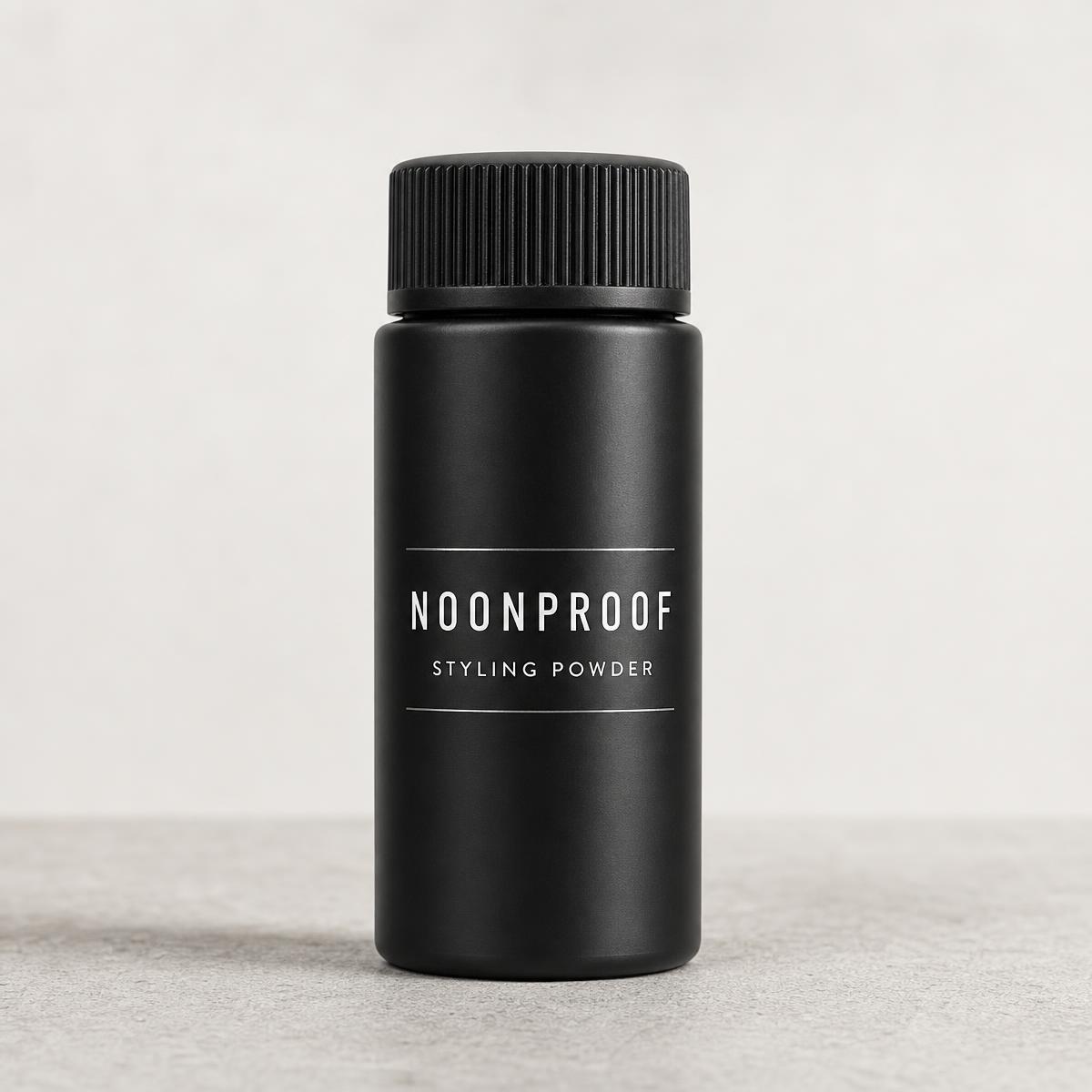
NoonProof Styling Powder
The product this article is about: applied dry, at the root, in traces.
See Styling Powder
Keep reading
Related guidance
Filter the library by the problem you are solving, your hair type, or the technique you want to get right.
 Blow-Dry Technique
How to Blow Dry Men's Hair for More Volume
A step-by-step blow-dry method for men who want height at the root instead of a flat, glued-down finish — and the reason technique beats product here.8 min read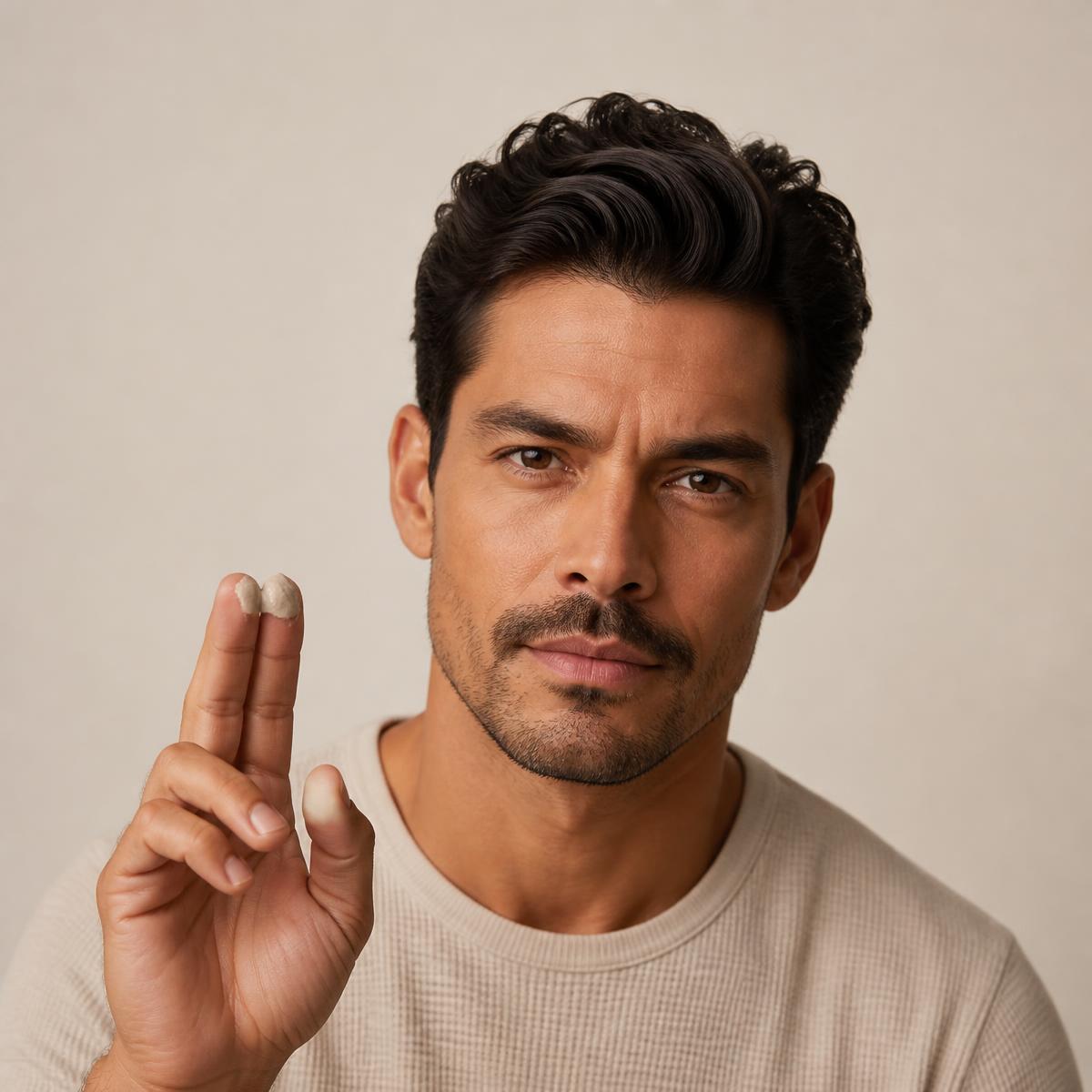 Application Technique
How Much Hair Product Should You Actually Use?
Most men use two to three times more than they need. Dosage, distribution and how to tell you have overdone it.8 min read Product Education
Texture Powder vs Sea Salt Spray vs Clay: What's the Difference?
The fastest way to understand men's styling products is by the stage of the routine they belong to. This is the three-way difference, in one table and one decision.7 min read Volume & Root Lift
Why Thick, Straight Hair Falls Flat by Midday
Thick hair has the mass to hold a shape but none of the structure. Here is why it collapses a few hours in, and how to set the root so it does not.9 min read