


Product Education
Texture Powder vs Sea Salt Spray vs Clay: What's the Difference?
7 min readReviewed by the NoonProof editorial team
Quick answer
What is the difference between texture powder, sea salt spray and clay?
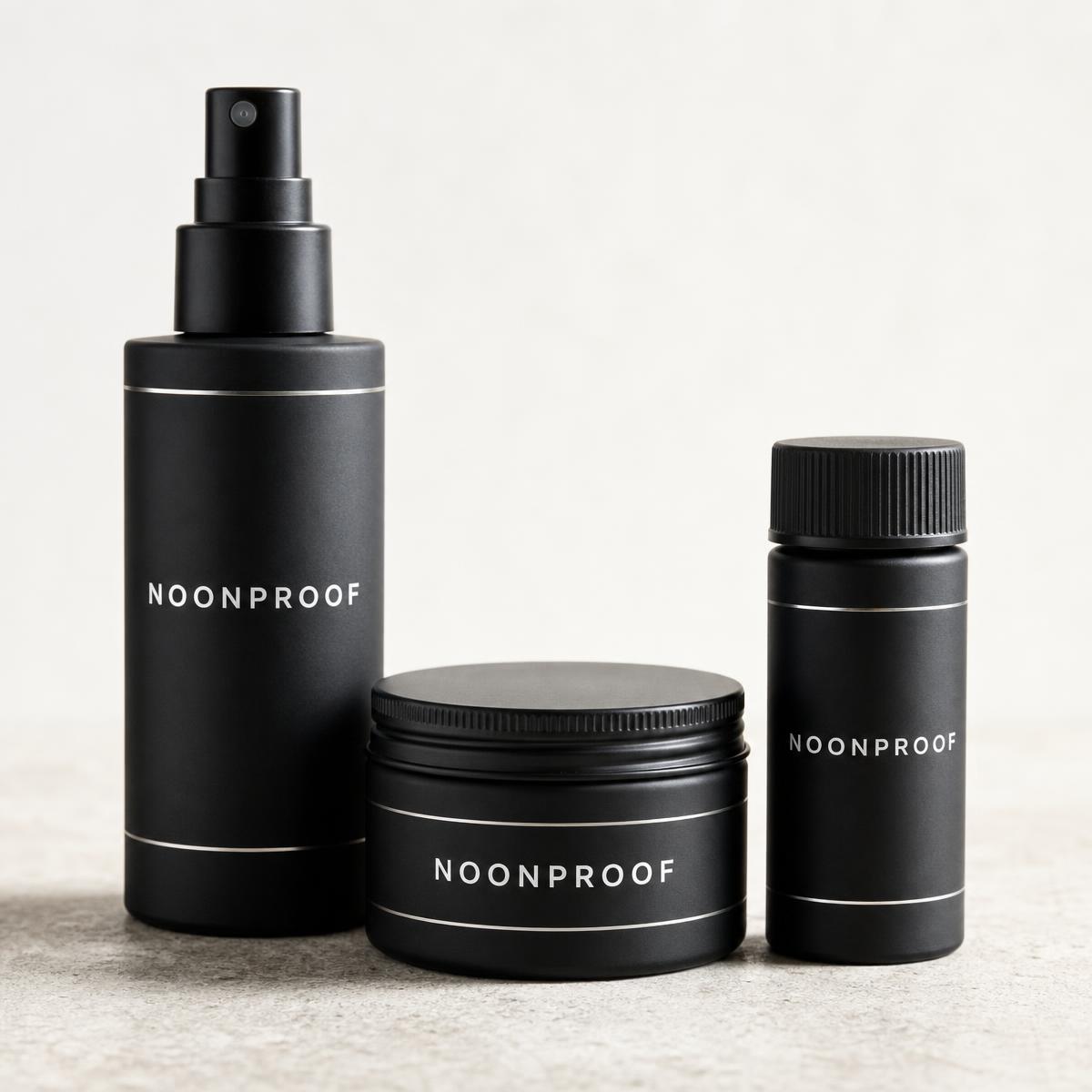
Sea salt spray is applied to damp hair before drying to build texture and grip. Styling clay is applied to dry hair to build shape, control and hold. Texture powder is applied dry at the root to restore lift, absorb oil and refresh the style — and it can also be used on its own. They occupy three different stages of the same routine rather than replacing each other.[1]
Key takeaways
- Sea salt spray works on damp hair, before drying, for texture and grip.[2]
- Clay builds the shape: structure, control and primary hold on dry hair.[1]
- Powder restores root lift, texture and oil control — during the day or on its own.[1]
- The NoonProof order is prep, build, refresh: spray, clay, powder.[3]
- Hair density, thickness and oil level decide which stage matters most for you.[3]
Decide in 10 seconds
Side by side
Sea salt spray
- Best for
- Pre-styling texture
- Applied to
- Damp hair
- Volume
- Medium
- Texture
- High
- Control
- Light
- Finish
- Natural
Styling clay
- Best for
- Shape and control
- Applied to
- Dry hair, surface
- Volume
- Medium
- Texture
- Medium
- Control
- High
- Finish
- Matte
Texture powder
- Best for
- Root lift and dry texture
- Applied to
- Dry hair, roots
- Volume
- High
- Texture
- High
- Control
- Medium
- Finish
- Matte
General product-category behaviour, not a claim about any single formula.
Decision
Which one do I need?
Need pre-styling texture?
Need shaping, control and hold?
Need root volume or a midday refresh?
Not sure?
Three products, three stages
Almost every men's styling product falls into one of three roles. Once you know the role, choosing gets much simpler.
- 01 Prep — changes how hair behaves before you shape it. Applied damp. Sea salt spray sits here.
- 02 Build — creates the shape: structure, definition, control and primary hold. Applied dry. Clay sits here.
- 03 Refresh — restores root lift, absorbs excess oil and revives texture during the day. Applied dry, at the root. Texture powder sits here, and it also works on its own for a quick lift.
Buying a second control product when the missing stage is prep or refresh is the most common styling mistake.
The three-way comparison
General category behaviour, described so you can place each product in a routine.
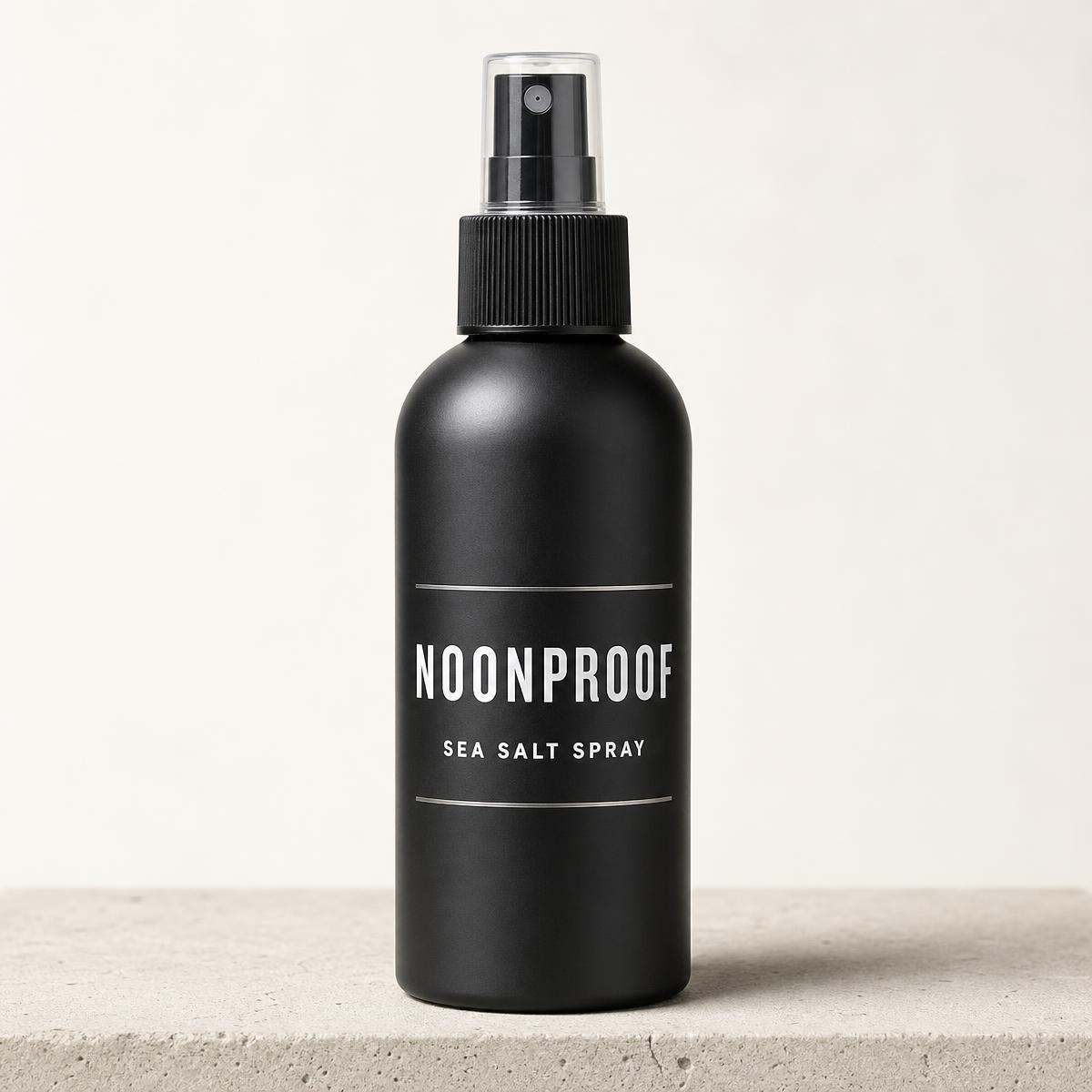
Sea salt spray
Spray is applied to towel-dried hair, worked through and then dried in.
It gives hair grip and separation so it stops behaving like one flat sheet. On thick, straight hair this is often the difference between a style that holds and a style that slides back down.
It is a preparation step. Applied over a finished style, it undoes the style.
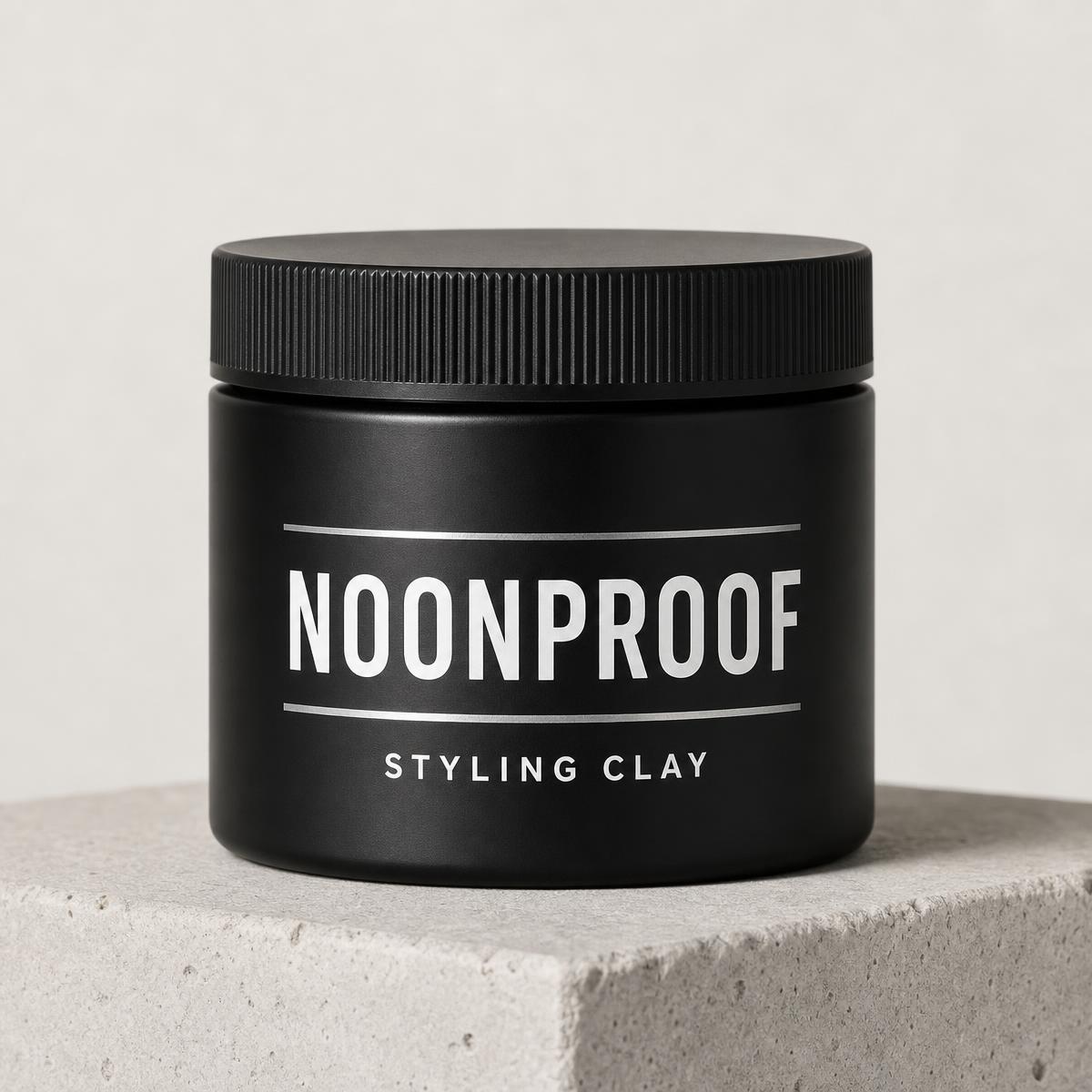
Clay
Clay is the building stage. Warmed between the palms and worked through dry hair, it sets direction, controls stray movement and leaves a matte surface.
It is the only one of the three that reliably answers *my shape does not stay put*. It is a poor answer to *my hair looks flat*.
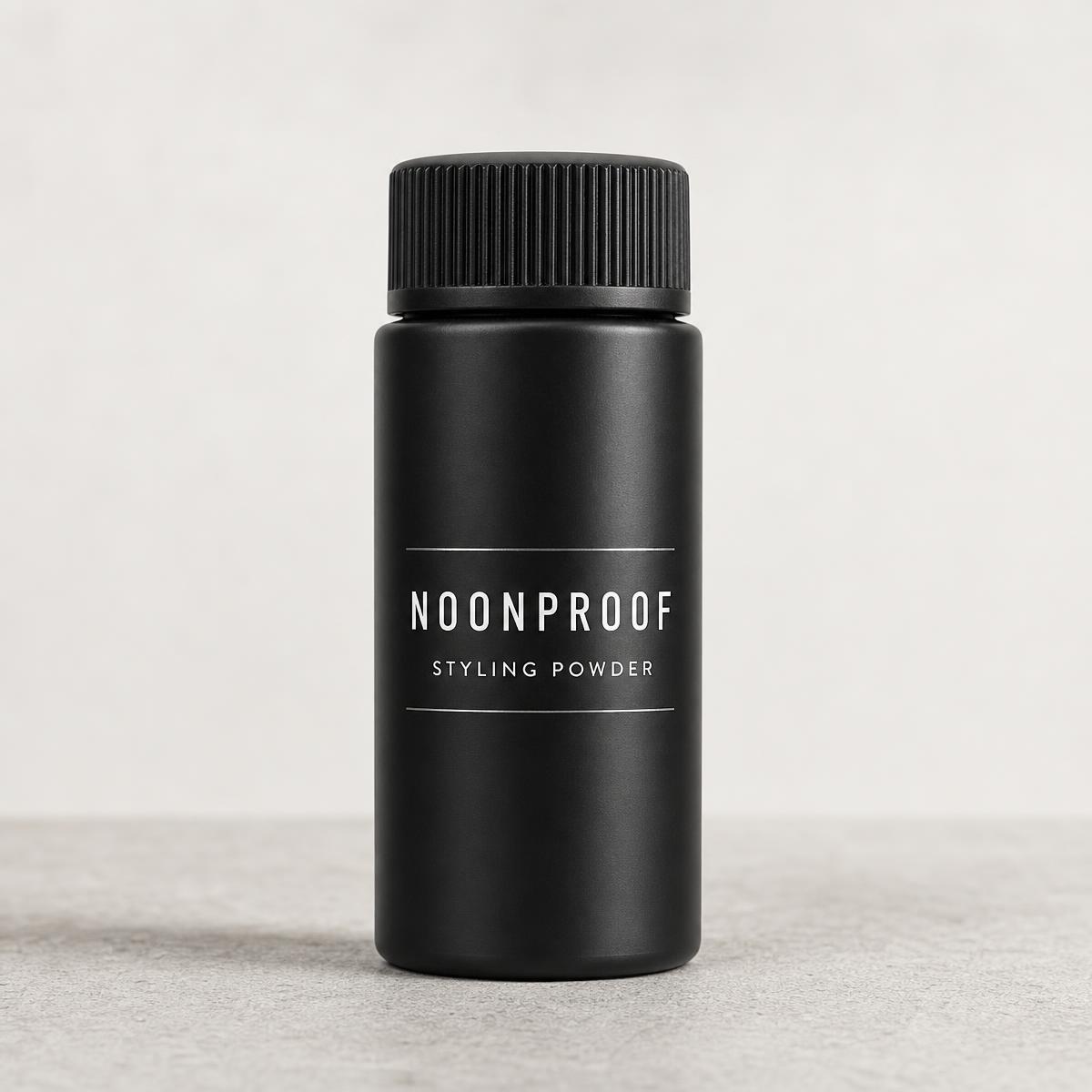
Texture powder
Powder is applied dry, directly to the root area, in very small amounts. Its purpose is lift: it adds volume and dry friction exactly where hair collapses first, which is what makes it the refresh step later in the day.
The finish is matte, and the effect is mechanical — hair sits further apart at the root, so the style has height it did not have before. It is also perfectly usable on its own when you want root lift, texture or oil control without a full routine.
Because it is potent by volume, powder is the easiest of the three to over-apply. See how much texture powder you should use.
Which one do I need?
Pick by the problem, not by the product name.
If you are not sure which of the three problems you actually have, that is what the hair quiz is for — the answer changes with your density, strand thickness, texture and oil level.
Using all three in order
In a full routine the order is fixed:
- 0101 Prep — damp — sea salt spray through the mid-lengths, then dry with direction.
- 0202 Build — dry, surface — clay to set the shape, control and hold.
- 0303 Refresh — dry, roots — a trace of texture powder when the root drops during the day.
Skipping prep on thick hair is a common reason a routine underperforms, and reaching for more clay in the afternoon instead of a light powder refresh is another. For the deeper product-by-product breakdown, read styling clay vs hair powder vs sea salt spray.
Still deciding
Not sure which of the three your hair actually needs?
6 questions
Find Your Styling SystemHow we know this
- Root support and style collapse — A style collapses at the root before it collapses anywhere else, because that is where the weight of the length is carried.
- Surface friction and separation — Texture products work by increasing friction between strands so hair separates instead of lying as a single reflective sheet.
- NoonProof styling observations — Stage-based routine framework from in-house testing; presented as practical guidance, not clinical measurement.
Last reviewed August 24, 2026
What this means for your routine
Where NoonProof fits
- PRE-STYLE
NoonProof Sea Salt Spray
Stage one — prepares how the hair behaves before you shape it.
See Sea Salt Spray - ROOT VOLUME
NoonProof Styling Powder
Stage two — lift at the root, where a style is actually supported.
See Styling Powder - CONTROL + FINISH
NoonProof Styling Clay
Stage three — shape and control at the end of the routine.
See Styling Clay
Keep reading
Related guidance
Filter the library by the problem you are solving, your hair type, or the technique you want to get right.
 Product Education
Hair Clay vs Sea Salt Spray: Which Should You Use?
Clay and sea salt spray solve different problems at different points in a routine. This is what each one actually does, and how hair density, thickness and oil level decide which one you need.7 min read Application Technique
How Much Texture Powder Should You Use?
Texture powder is the easiest styling product to over-apply. This is how much to use, where it goes, and what to do when you have used too much.6 min read Product Education
Styling Clay vs. Hair Powder vs. Sea Salt Spray
Three products, three genuinely different jobs. A direct comparison on hold, finish, weight and who should skip each one.9 min read Product Education
Sea Salt Spray vs Hair Clay: When to Use Each
If you already own both, the useful question is not which is better but when each one earns its place. This is the timing guide.6 min read