


Product Education
Hair Clay vs Sea Salt Spray: Which Should You Use?
7 min readReviewed by the NoonProof editorial team
Quick answer
Should I use hair clay or sea salt spray?
Clay is a shaping product used at the end of styling to hold a shape and control movement. Sea salt spray is a pre-styling product used on damp hair to add texture and grip before any shaping happens. Most men choosing between the two are really choosing between control and texture.[1]
Key takeaways
- Clay is a finishing product: it holds a shape you have already created.[2]
- Sea salt spray is a preparation product: it changes how hair behaves before you shape it.[2]
- Thick, dense hair usually needs the preparation step first, or the clay works against slick, heavy strands.[1]
- Fine or low-density hair often needs texture more than hold, and can be weighed down by too much clay.[1]
- They are not competitors. Used in order, spray on damp hair and clay on dry hair, they do different jobs.[2]
Decide in 10 seconds
Side by side
Sea salt spray
- Best used
- Damp hair, before drying
- Volume
- Medium
- Texture
- High
- Control
- Light
- Finish
- Natural
Styling clay
- Best used
- Dry hair, end of routine
- Volume
- Medium
- Texture
- Medium
- Control
- High
- Finish
- Matte
General product-category behaviour, not a claim about any single formula.
Decision
Which one do I need?
Need pre-styling texture and grip?
Prep
Need stronger shaping and control?
Build
Need root volume before either?
Refresh
Want texture and control in the same routine?
Prep → Build
Two different stages of the same routine rather than two competing choices.
Not sure which your hair needs?
What clay actually does
Clay is a styling product applied to dry or nearly dry hair at the end of a routine. Its job is control: it lets you place hair in a direction and keeps it roughly there, with a matte rather than shiny finish.
Control products work on the outside of the strand. They add a light film that increases friction between hairs so a shape resists collapsing under its own weight or being pushed around by wind, hands and humidity.
What clay does not do is change the underlying behaviour of the hair. If your hair is heavy, slick and falls flat before you touch a product, clay is being asked to hold up something that has no support underneath it. That usually ends with more product, more weight, and a style that drops anyway.
What sea salt spray actually does
Sea salt spray is applied earlier — on damp hair, before drying. It is a preparation step, not a finishing one.
Sprays of this type add grip and roughen the surface of the strand slightly, so hair separates instead of sliding back into one flat sheet. The effect is texture: the hair holds a bit of shape on its own, and the products that follow have something to work with.
Because it is applied damp and dried in, the result is set as the hair dries rather than layered on top of a finished style. That is the single biggest practical difference between the two products.
Quick comparison
Neither product replaces the other. This is the general category behaviour most men are choosing between.
The practical rule: if the problem is *shape does not stay*, look at clay. If the problem is *hair has nothing to hold onto in the first place*, look at spray.
How your hair traits change the answer
Product choice is not universal, because hair behaves differently before you touch it.
- Thick, dense hair. There is a lot of weight per square inch. Control alone rarely wins — the preparation step matters more here than in any other hair type.
- Fine or low-density hair. Texture and separation make hair look fuller. Heavy control products can flatten it.
- Straight hair. Strands sit close together and reflect light as one surface. Texture is what breaks that up.
- Wavy or curly hair. There is already separation; control is often the missing piece rather than texture.
- Oily hair or scalp. Oil migrates down the strand through the day and softens any shape. Anything that adds more slip works against you.
- Higher styling resistance. Coarse, stubborn hair takes a shape reluctantly and needs the shape set while drying, not forced afterwards.
The right answer also depends on your hair density, thickness, texture, oil level and how resistant your hair is to being styled.
Common mistakes
- Using clay to fix a flatness problem. Weight on top of weight.
- Applying salt spray to soaking hair. It dilutes and the effect disappears; towel-dry first.
- Skipping the dry-down. Spray that air-dries without direction sets the hair in whatever direction it fell.
- Reapplying either product midday over an oily scalp. Clean the root or reset it dry first.
- Judging a product in the first hour. The question is what the style looks like at 2pm, not at 8am.
Routine
When to use both
- 01Prep
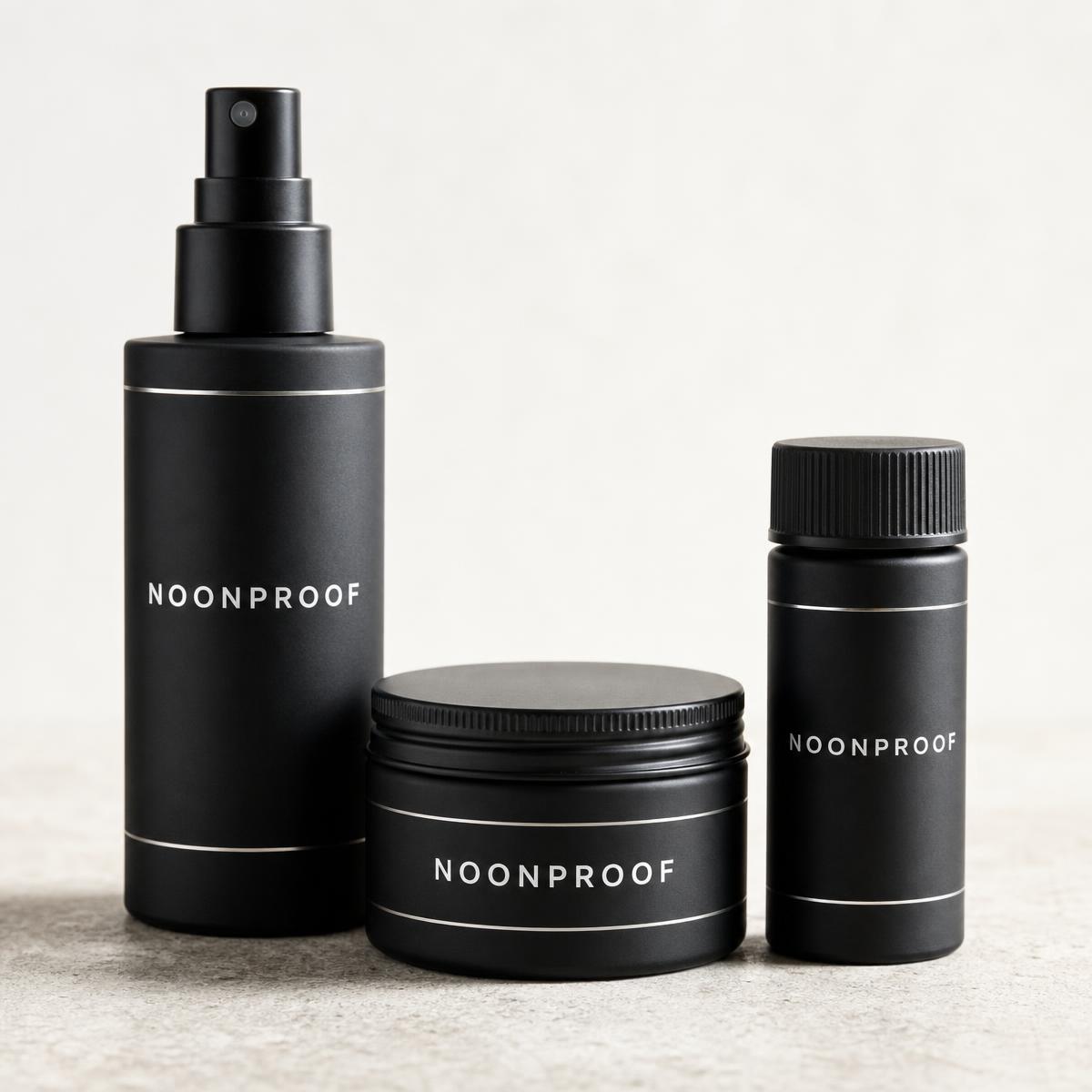
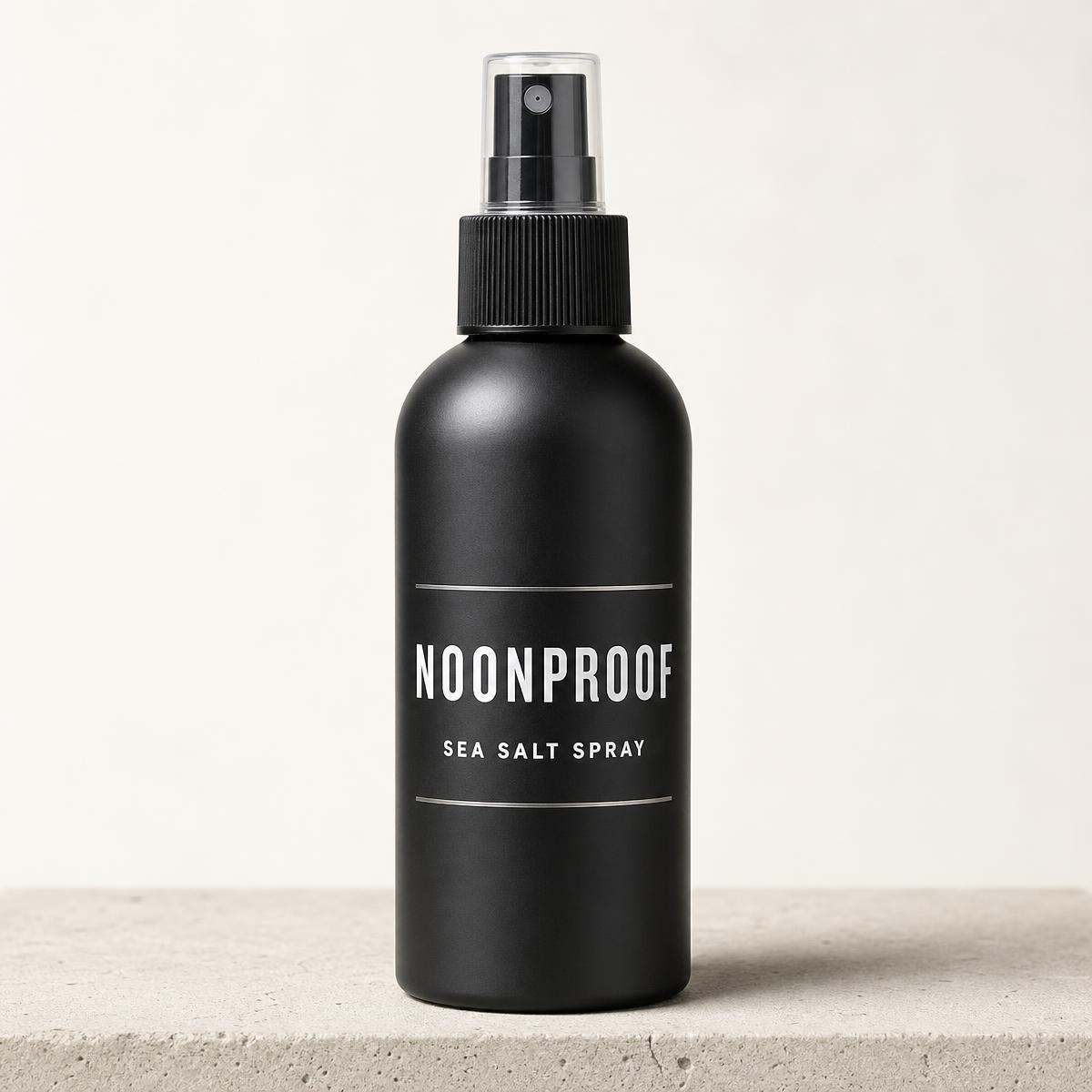
NoonProof Sea Salt Spray
Applied to damp hair, it adds lightweight texture, separation and the grip a styling product needs to work with.
See Sea Salt Spray - 02Build
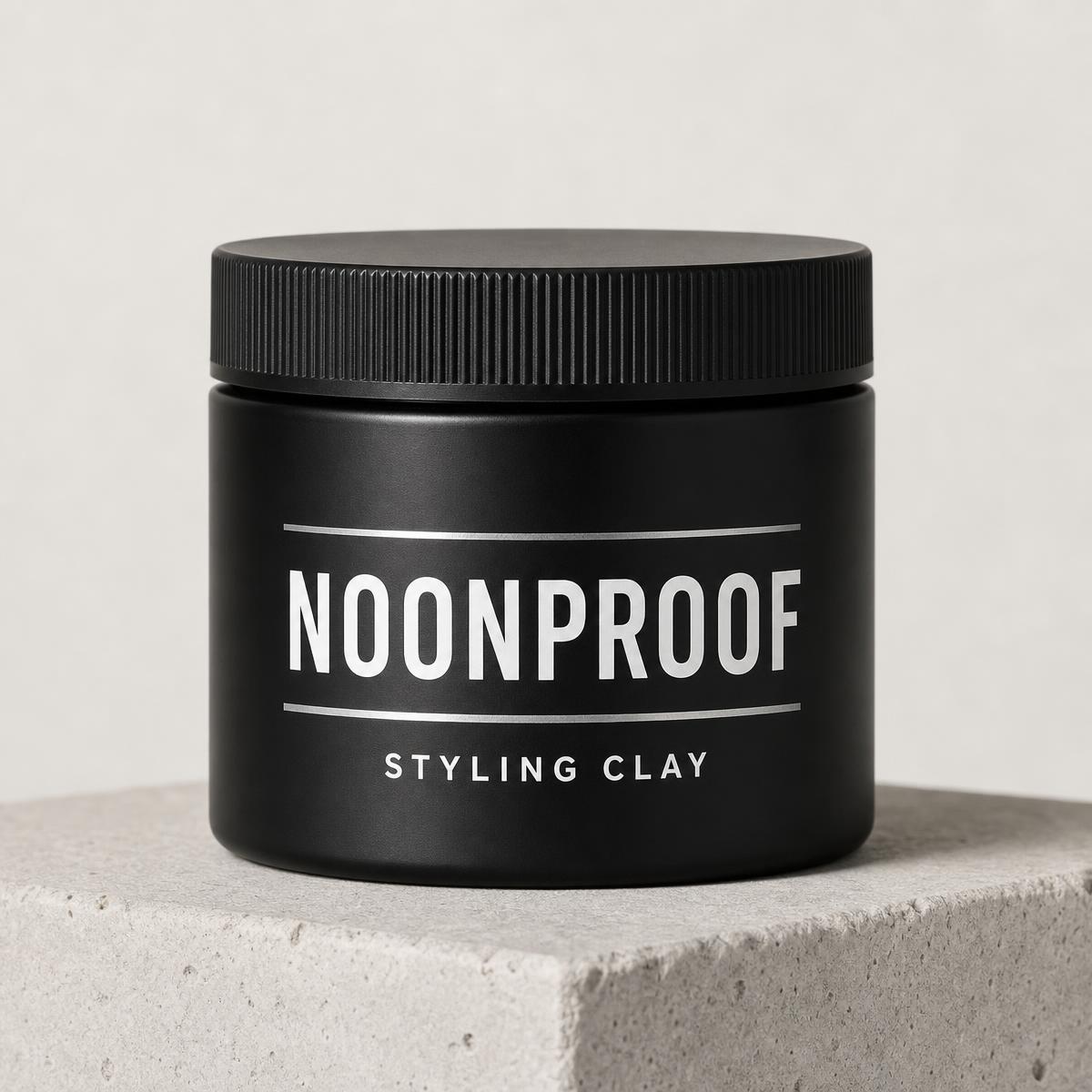
NoonProof Styling Clay
Worked through dry hair, it shapes and controls the style with a natural matte finish that stays restylable.
See Styling Clay - 03Refresh
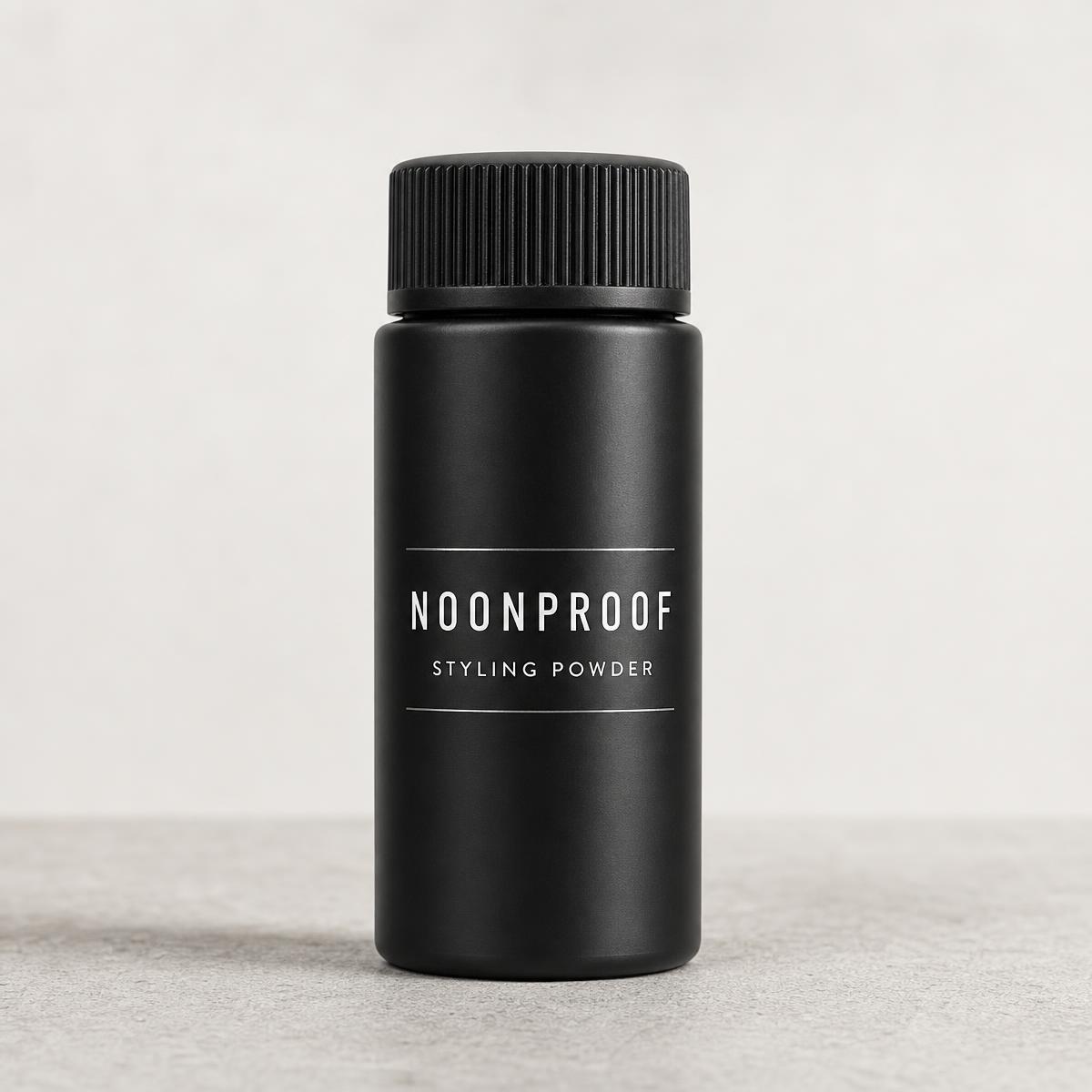
NoonProof Styling Powder
Used at the roots later in the day when lift drops or oil starts to weigh the style down.
See Styling Powder
Most people do not need every step every day. Use the spray when you want texture and grip to build on, and the clay when the shape needs to hold.
Still deciding
Not sure which styling product your hair actually needs?
6 questions
Find Your Styling SystemHow we know this
- Hair surface friction and styling hold — Styling products increase friction between strands so a shape resists gravity and movement; the effect is mechanical and temporary.
- Hydrogen bonding and temporary hair setting — Water breaks the hydrogen bonds inside a strand and they reform as it dries, which is why shape set on damp hair holds better than shape forced onto dry hair.
- NoonProof styling observations — Category behaviour described from in-house routine testing; presented as practical observation, not clinical measurement.
Last reviewed August 14, 2026
What this means for your routine
Where NoonProof fits
- PRE-STYLE
NoonProof Sea Salt Spray
The damp-hair step: texture and grip before any shaping happens.
See Sea Salt Spray - CONTROL + FINISH
NoonProof Styling Clay
The dry-hair step: sets direction and holds the shape you made.
See Styling Clay
Keep reading
Related guidance
Filter the library by the problem you are solving, your hair type, or the technique you want to get right.
 Product Education
Texture Powder vs Sea Salt Spray vs Clay: What's the Difference?
The fastest way to understand men's styling products is by the stage of the routine they belong to. This is the three-way difference, in one table and one decision.7 min read Product Education
Sea Salt Spray vs Hair Clay: When to Use Each
If you already own both, the useful question is not which is better but when each one earns its place. This is the timing guide.6 min read Product Education
Styling Clay vs. Hair Powder vs. Sea Salt Spray
Three products, three genuinely different jobs. A direct comparison on hold, finish, weight and who should skip each one.9 min read Volume & Root Lift
Why Thick, Straight Hair Falls Flat by Midday
Thick hair has the mass to hold a shape but none of the structure. Here is why it collapses a few hours in, and how to set the root so it does not.9 min read