


Product Education · Fine Hair
Cream Clay vs. Fiber Clay for Fine Hair: What Actually Matters
Written by NoonProof Editorial Team · General styling guidance, not product-test results.
The short answer
Neither label is automatically better for fine hair. A cream clay can also contain fibers, and either formula can feel light or heavy. Look for easy distribution, the finish you want and enough shape without unwanted weight; judge the specific formula with a tiny-amount trial rather than the name on the jar.
Fine strands, thin density: two different questions
Fine hair describes a relatively small diameter of individual strands. Thin hair describes lower density: fewer strands across an area of scalp. You can have fine strands and dense coverage, or coarser strands and lower density. Neither term alone tells you the best styling product.
For this comparison, the practical question is whether a small application gives your fine strands useful separation and shape without making them feel coated or look flatter. If lift is your main concern, start with fine-hair volume without crunch; product labels are only part of that decision.
Cream and fiber are not opposing categories
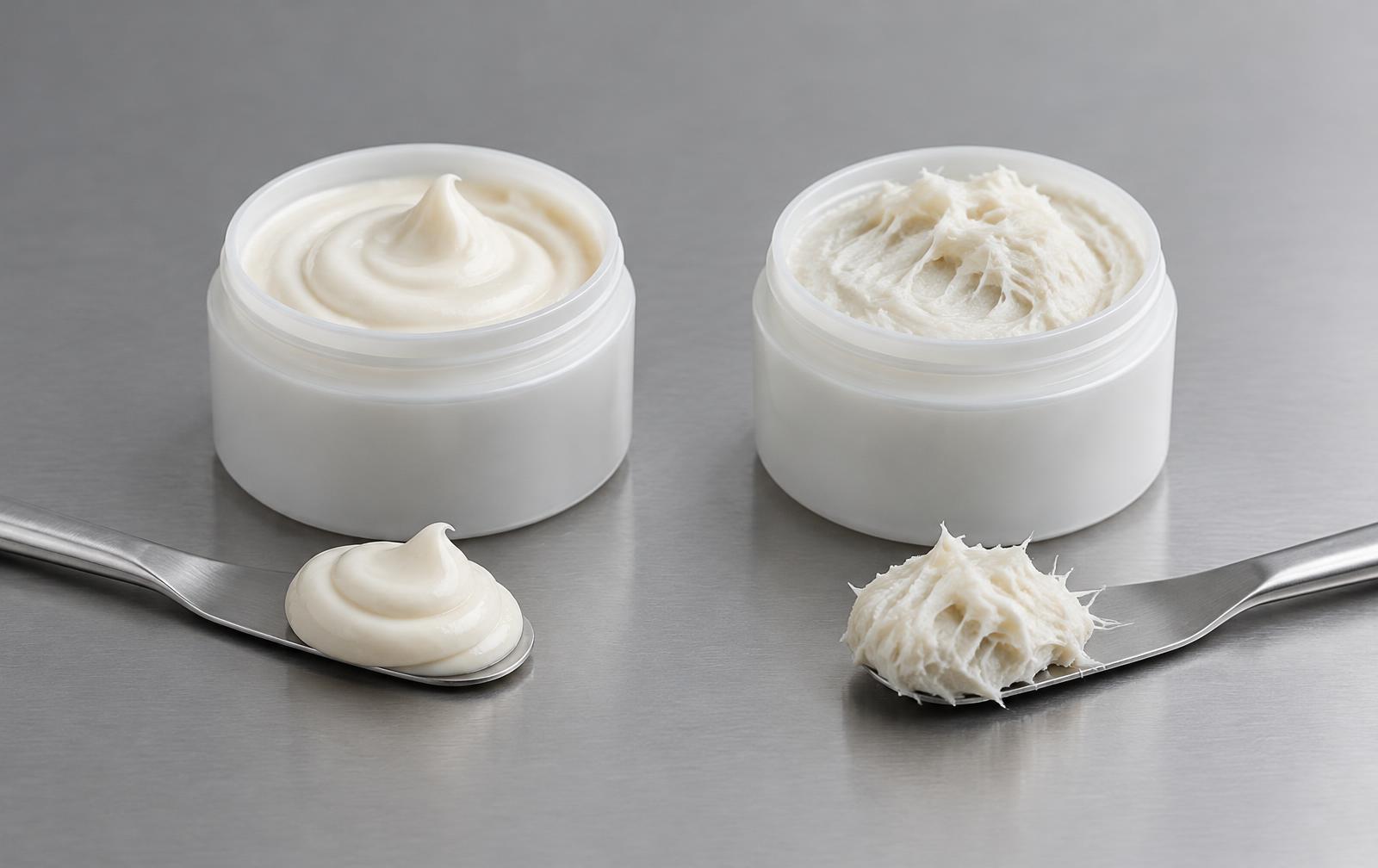
“Cream clay” commonly describes a clay styling product with a creamy consistency. “Fiber clay” may describe a fiber-containing formula or a product marketed for a stringy, fibrous texture. Manufacturers use these names differently; a label is not enough to establish the ingredients or how a formula behaves.
A cream clay can also contain fibers. Smoothness in the jar does not rule them out, and visible strings do not prove better hold. Treat these terms as clues to investigate, not a choice between two standardized formulas.
Compare what happens in your hair, not just in the jar
| Quality | Creamy formulas may… | Fiber-style formulas may… | What matters |
|---|---|---|---|
| Spreadability | Spread readily, or leave a rich coating. | Stretch between hands, or feel smooth once worked through. | Even distribution without lumps, tugging or repeated application. |
| Finish | Look matte, natural or shiny. | Look matte, natural or shiny too. | The finish after application, not an assumption from texture. |
| Lift | Preserve lift at a small amount, or weigh a style down. | Add separation, or group strands and reduce fullness. | Whether your roots and outline still look how you want. |
| Hold | Offer flexible or firmer shape depending on the formula. | Offer flexible or firmer shape depending on the formula. | Enough shape for your style without unwanted stiffness or weight. |
| Washability | Remove readily or need more careful cleansing. | Remove readily or leave an unwanted coated feel. | Product directions and how hair feels after your usual wash. |
Application on damp versus dry hair may change the result, so follow the specific product’s directions. Do not compare one formula over yesterday’s residue with another on freshly washed hair and attribute the entire difference to “cream” or “fiber.”
A small-amount trial for fine hair
- Set a familiar starting point. Use your usual clean-hair routine and the hair condition specified by the product. Try one formula at a time rather than layering several new products.
- Start tiny and emulsify. Take a very small dab and rub it between your hands into a thin, even film. There is no universal dose for these labels; hair length, density and formula concentration vary.
- Place it carefully. Work lightly through the areas that need shape, beginning with mid-lengths rather than concentrating a fresh dab at the roots or front. Use what remains on your fingers near the roots only if needed and consistent with the directions.
- Look now, then at midday. Notice shine, separation, visible lift, stiffness and coated feel immediately. Later, check whether the style has flattened, clumped or become uncomfortable. This is a personal observation, not proof of all-day performance.
- Stop if it feels heavy or leaves residue. Do not add another layer to rescue an overloaded style. Wash according to the directions; try less another time, or set the formula aside if the unwanted effect persists. Stop using it if irritation occurs.
For distribution basics, read how much hair product to use. Its general examples are not a prescribed dose for an unfamiliar cream or fiber formula.
A simple decision table
| Priority | What to look for | What to avoid |
|---|---|---|
| Easy application | A tiny dab that spreads evenly through your hair. | Lumps, tugging or needing a large amount just to distribute it. |
| Fuller-looking shape | Separation and lift that remain acceptable at your midday check. | Flattened roots or thick clumps that reveal more scalp than you want. |
| Natural feel | Enough control with a finish and flexibility you like. | Assuming matte means lightweight or fiber means stronger. |
| Simple removal | Hair returning to its usual feel after washing as directed. | Persistent coating or adding product over unexplained residue. |
If the question is whether you need a clay at all, rather than which clay texture to try, see hair clay vs. sea salt spray. That is a different choice from comparing two labels within the clay category.
Frequently asked questions
- Is cream clay always lighter than fiber clay?
- No. Cream describes a creamy feel or format, not a guaranteed weight in hair. A small amount of one cream clay may feel heavier than another brand’s fiber clay. Amount, distribution and the complete formula matter more than the category name.
- Can one product be both cream clay and fiber clay?
- Yes. A creamy clay formula may also contain fibers or be marketed as having a fibrous texture. These are overlapping descriptions, not necessarily separate product types. Ask the manufacturer what its terms mean; the name alone does not confirm the composition.
- Does fine hair need weak hold?
- Not necessarily. Fine refers to strand diameter, not the shape you want to maintain. You may want noticeable control with very little product. A stronger hold label still does not tell you how heavy, stiff or shiny a specific formula will feel on your hair.
- Which type washes out more easily?
- Neither label reliably answers that. Removal depends on the full formula, how much you applied and your usual cleansing routine. Follow the product’s directions and notice whether your hair returns to its usual feel after washing. Do not assume creamy means easy-rinsing or fiber means persistent residue.
What we have not verified
We have not conducted a controlled comparison of cream clay and fiber clay, measured their effects on fine hair, or verified manufacturer-specific hold, weight, finish or washability claims. This article offers a way to assess your own styling experience; it does not report laboratory results or recommend a winning formula.
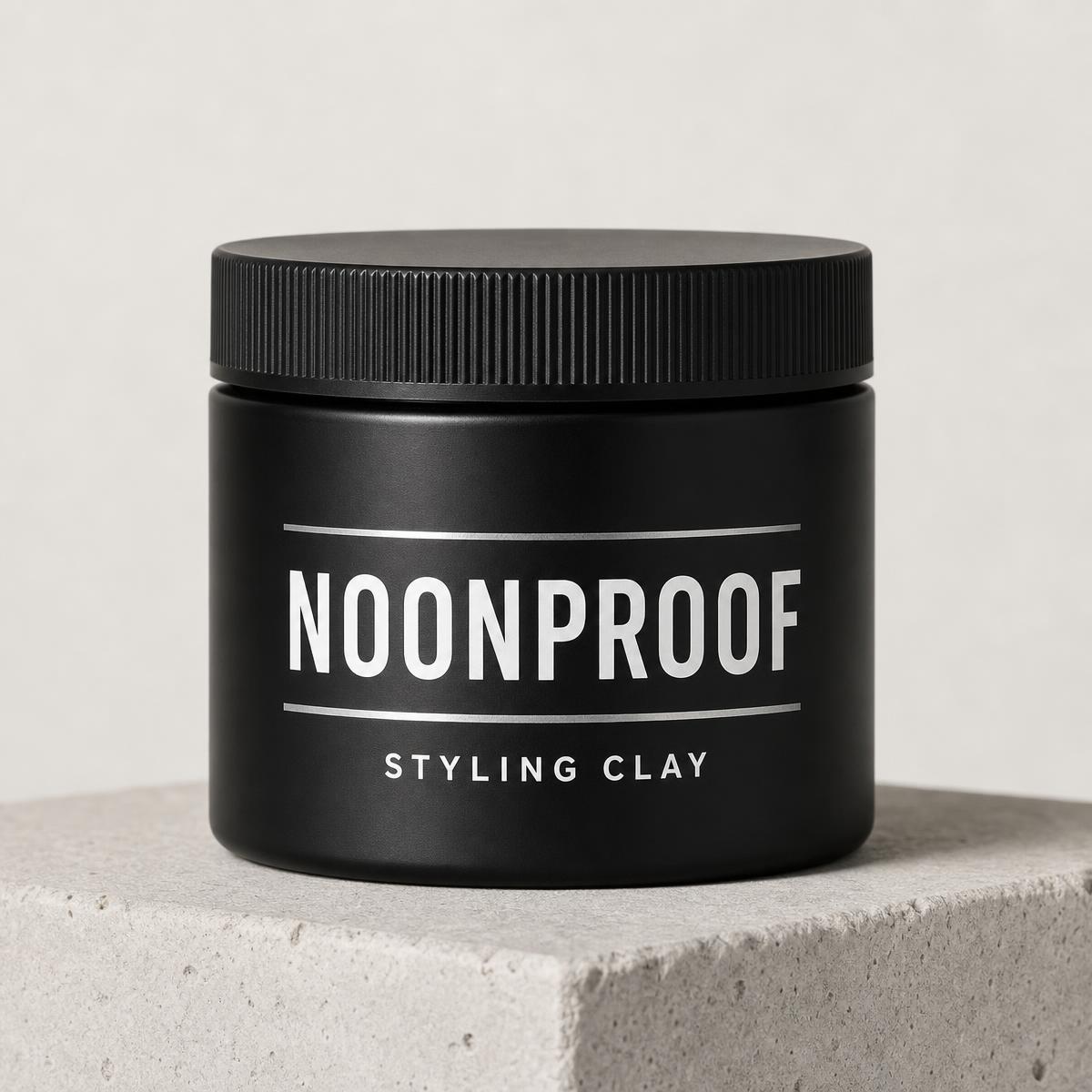
NoonProof’s primary focus remains thick, straight, resistant and hard-to-style hair. Our pre-launch prototypes are still in formulation testing and cannot currently be purchased. We are not claiming to sell separate cream clay and fiber clay products or to have proven their suitability for fine hair.
Start with your hair, not a product label
Use the Hair Quiz to explore guidance for your texture, density and styling goals.
Explore hair guidance